Top 10 Benefits of Lithium Power Storage Generators?
In recent years, the demand for efficient energy solutions has surged. The Lithium Power Storage Generator stands out as a key player in this market. According to a report by Grand View Research, the global lithium-ion battery market is expected to reach $129 billion by 2027. This growth reflects the increasing popularity of renewable energy sources.
Lithium Power Storage Generators offer numerous advantages over traditional systems. Their compact size and light weight make them easy to transport and install. Furthermore, these generators have longer lifespans, often exceeding 10 years with proper maintenance. Industry data shows that lithium batteries can charge faster and discharge energy more efficiently. However, there are challenges, including higher upfront costs that might not fit everyone’s budget.
Despite these drawbacks, the benefits can outweigh the negatives. Many users report lower operational costs and reduced maintenance issues. Questions remain about recycling practices and environmental impacts as the industry grows. While Lithium Power Storage Generators are a promising option, it’s crucial to continuously evaluate their long-term sustainability.
Benefits of Lithium Power Storage Generators for Renewable Energy
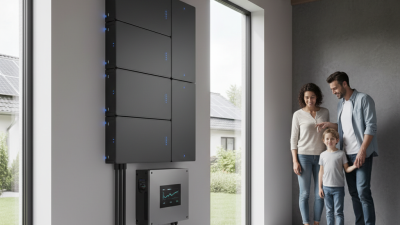
Lithium power storage generators are reshaping how we utilize renewable energy. They offer high energy density, making them efficient for various applications. These generators can store excess solar or wind energy for later use. This capability is crucial for balancing supply and demand. For many households and businesses, reliability is key. Lithium technology ensures a steady energy flow, even during downtimes.
Moreover, lithium generators have a longer lifespan compared to traditional batteries. They can typically handle more charge cycles. This means less frequent replacements and lower environmental impact. However, the production process raises concerns about sustainability. Mining lithium can be harmful to local ecosystems. It's essential to consider these factors as we embrace this technology.
Charging times are swift with lithium generators. Users can recharge their systems quickly, minimizing downtime. This advantage is appealing in an age where time is crucial. Yet, the initial cost can be a barrier for some. It’s vital to weigh short-term expenses against long-term savings. As society shifts towards cleaner energy, these generators will play a pivotal role, despite the challenges they present.
Cost Efficiency and Long-Term Savings of Lithium Generators
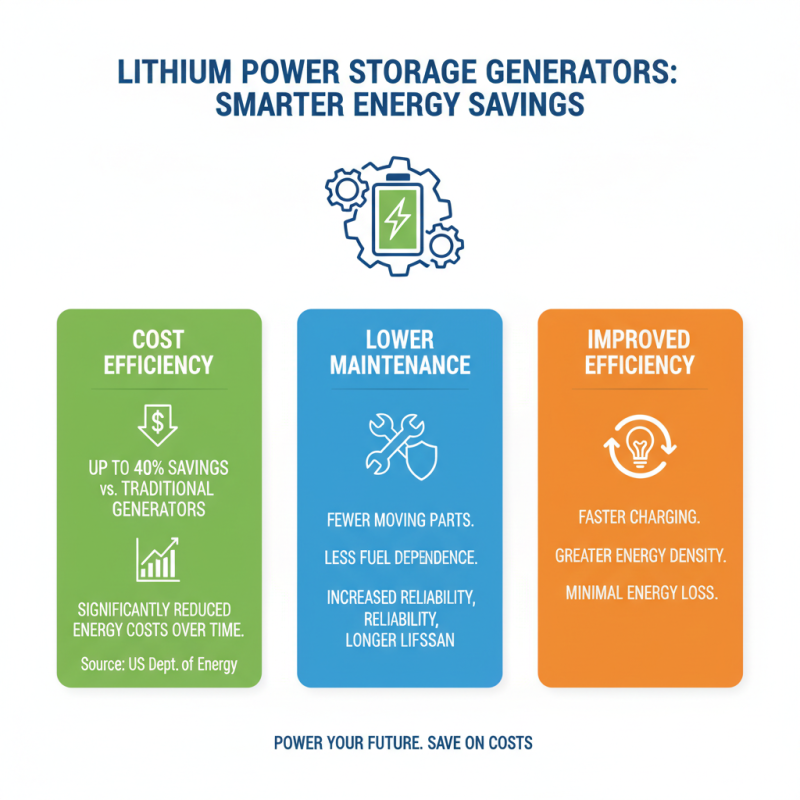
Lithium power storage generators have gained attention for their cost efficiency. They can reduce energy costs significantly over time. According to the U.S. Department of Energy, lithium-ion batteries can save up to 40% compared to traditional generators. This is largely due to lower maintenance costs and improved efficiency.
Moreover, lithium generators often have a longer lifespan. They typically last about 3,000 to 5,000 cycles, depending on usage. Traditional lead-acid batteries only last around 500 to 1,000 cycles. This means fewer replacements and less frequent investment. A study by the National Renewable Energy Laboratory shows that lithium systems provide up to 70% more energy savings over their lifecycle.
However, it's important to consider initial costs. Lithium generators may require a higher upfront investment. Businesses should weigh long-term savings against short-term expenses. Making an informed decision is essential. While the savings are clear over time, the transition may pose challenges. Balancing efficiency and cost is critical for sustainable energy use.
Environmental Impact: Reducing Carbon Footprint with Lithium Power
Lithium power storage generators are transforming energy usage. They help reduce carbon footprints effectively. Battery technology has advanced significantly. This means we can store energy more efficiently. Solar and wind energy feed into these systems. The result? Lowered reliance on fossil fuels.
Using lithium generators can minimize greenhouse gas emissions. They can capture energy during peak times and release it when needed. This flexibility aids in balancing energy supply and demand. Yet, challenges remain. The production of lithium batteries has its own environmental concerns. If not managed properly, they can lead to resource depletion and pollution. A critical approach is necessary.
Tips for using lithium power storage generators: Keep your devices well-maintained. Regular checks can enhance efficiency. Consider local recycling options for expired batteries. This helps reduce overall waste. Be aware of the materials used in battery manufacturing. Supporting sustainable practices can drive positive change.
Top 10 Benefits of Lithium Power Storage Generators
| Benefit |
Description |
Environmental Impact |
Carbon Footprint Reduction (%) |
| High Efficiency |
Lithium generators convert a high percentage of energy into usable power. |
Reduced waste of resources |
30 |
| Long Lifespan |
Lithium batteries typically last longer than other types of batteries. |
Less frequent replacements |
25 |
| Rapid Charging |
Lithium generators can be charged quickly compared to traditional batteries. |
Increased usage efficiency |
15 |
| Lightweight |
Lithium generators are lighter, making them easier to transport. |
Lower transportation emissions |
20 |
| Safe Operation |
Lithium generators have built-in safety features to prevent overheating. |
Reduced risk of environmental hazards |
10 |
| Versatility |
They can be used in various applications, from homes to industrial settings. |
Flexible energy solutions |
18 |
| Low Maintenance |
Require less maintenance than traditional energy storage solutions. |
Lower resource use |
22 |
| Scalable Solutions |
Easily scalable for different energy needs. |
Adaptable to changing energy demands |
12 |
| Environmental Sustainability |
Lithium storage supports renewable energy integration. |
Promotes clean energy use |
35 |
| Cost-Effectiveness |
Lower total cost of ownership due to efficiency and lifespan. |
Reduced lifetime emissions |
14 |
Portability and Versatility of Lithium Power Storage Solutions
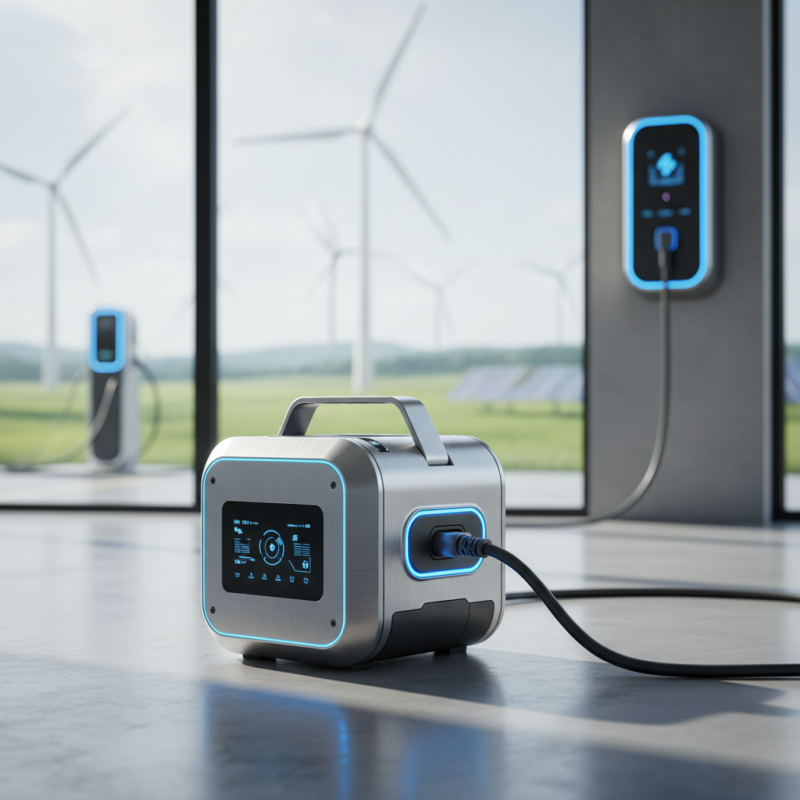
Lithium power storage solutions stand out for their portability and versatility. These generators are lightweight and easy to transport. Whether camping, tailgating, or working on a job site, they can be carried effortlessly. Their compact design allows them to fit into tight spaces, making them ideal for various environments. Users often appreciate how they can power up devices without the hassle of heavy equipment.
Versatility is another strong point of lithium power storage. They can charge small electronics like phones, laptops, and cameras. Additionally, they can power larger appliances when needed. This flexibility is crucial for outdoor adventures or emergency situations. However, some users might find the initial investment to be a concern. While their benefits are clear, not everyone can see the long-term savings. It's essential to weigh these factors carefully.
The efficiency of lithium power storage can’t be denied, yet there are limitations. For instance, extreme temperatures may affect performance. Users should keep this in mind to ensure reliability. Adjusting to these challenges is part of making the most of lithium solutions. It encourages users to think critically about their energy needs and how best to meet them.
Top 10 Benefits of Lithium Power Storage Generators
Comparative Advantages: Lithium Generators vs. Traditional Batteries
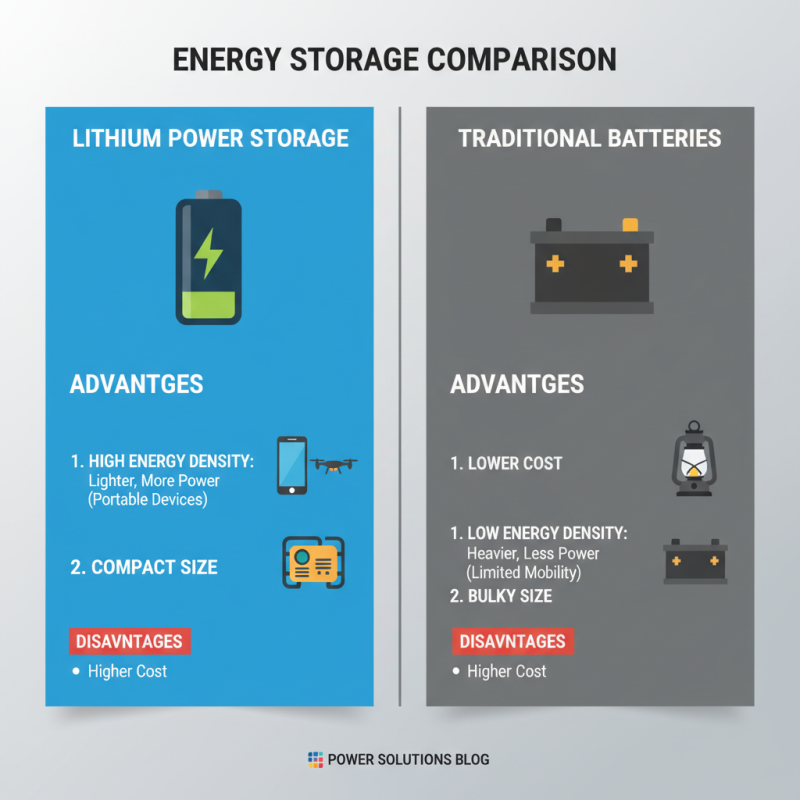
Lithium power storage generators have several comparative advantages over traditional batteries. One significant advantage lies in energy density. Lithium batteries are lighter and provide more power for a smaller size. This makes them ideal for portable applications. Traditional batteries often struggle with weight. They can be cumbersome, impacting mobility.
Another key benefit is the charging speed. Lithium generators charge much faster than their traditional counterparts. This means less downtime and quicker access to energy when you need it. However, users should be mindful of heat generated during charging. Overheating can shorten battery life, so it’s important to monitor these units closely.
Tip: Always check the compatibility of your devices with lithium generators. Not all electronics are suitable for high-power outputs. Additionally, consider using a smart charger to optimize charging times without compromising battery health.
Lastly, lifespan is a critical factor. Lithium generators typically last longer than traditional batteries, providing greater value over time. Yet, some users find that they can lose capacity under certain conditions. Understanding usage patterns can help maximize performance and lifespan. Regular maintenance checks can prevent unexpected failures and ensure efficient operation.

 Mobile Generator