What is an Inverter Ups and How Does it Work?
Inverter UPS is a power backup solution that many depend on during outages. It converts direct current (DC) to alternating current (AC). This ability ensures that homes and businesses continue functioning. Understanding how an Inverter UPS works is vital for effective use.
The process starts with the inverter taking stored battery energy. It then supplies clean power to the electrical devices. This mechanism is crucial for sensitive electronics. However, not all devices are compatible, leading to potential problems. Users must evaluate their needs carefully.
While many find Inverter UPS reliable, others report issues. It's important to consider the operating time and wattage capacity. Failure to match these elements can result in disappointment. Thus, a clear understanding of the system is essential for optimal performance.
Definition of Inverter UPS and Its Purpose
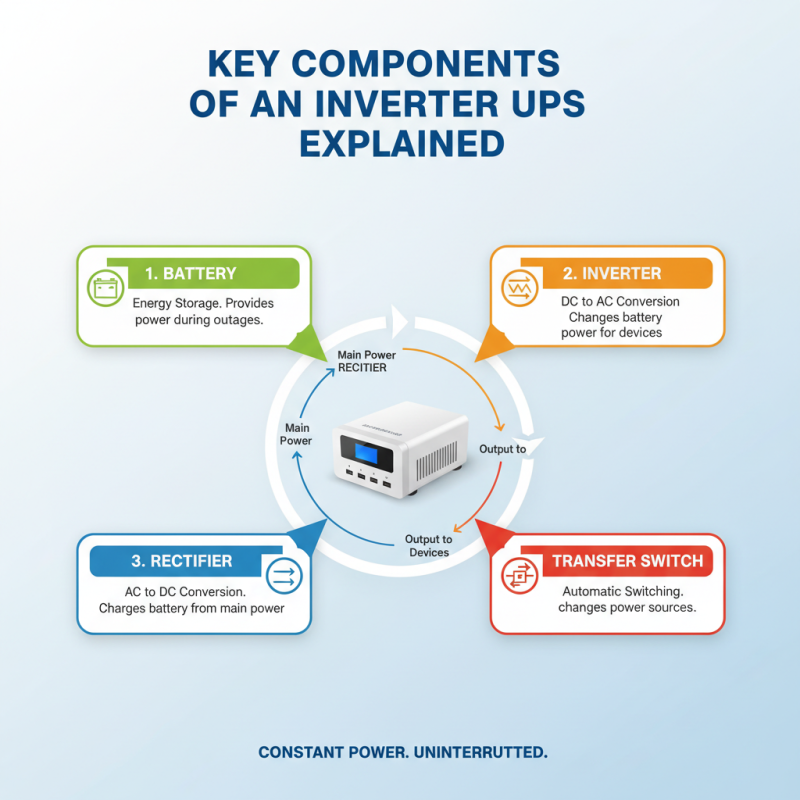
An inverter UPS (Uninterruptible Power Supply) serves as a critical appliance in modern power management. Its primary purpose is to provide backup power during outages and voltage fluctuations. The inverter converts DC electricity from batteries into stable AC power. This ensures that connected devices continue to function, safeguarding sensitive electronics and data.
According to industry reports, the global inverter UPS market is expected to grow significantly. The demand is driven by the increase in power outages and the need for reliable power sources in businesses. For example, a 2022 study showed that unplanned outages cost companies approximately $150 billion annually. This staggering figure highlights the importance of having adequate backup systems in place.
Tips: When choosing an inverter UPS, consider your power needs. Calculate the wattage of your devices to find the appropriate capacity. It’s wise to inspect battery runtime and inverter efficiency as well.
A high-quality inverter UPS prevents damage to equipment and data loss. Yet, many users forget maintenance. Regularly check battery health and connections. Neglecting these can lead to inefficiencies, which ultimately undermine the intended purpose of the UPS. Without proper care, a UPS may not deliver the expected performance when you need it most.
What is an Inverter UPS and How Does it Work? - Definition of Inverter UPS and Its Purpose
| Feature |
Description |
| Definition |
A device that converts DC power from batteries into AC power, maintaining stable voltage output. |
| Purpose |
To provide uninterrupted power supply during outages or fluctuations. |
| Types |
Offline, line-interactive, and online systems. |
| Input Voltage |
Typically ranges from 110V to 120V for standard systems. |
| Output Voltage |
Standard output is generally around 220V to 240V. |
| Battery Type |
Common types include sealed lead-acid (SLA) and lithium-ion batteries. |
| Typical Applications |
Used in homes, offices, and data centers to protect sensitive electronic equipment. |
| Key Benefits |
Protection from power surges, battery backup, and improved equipment longevity. |
How an Inverter UPS Converts DC to AC Power
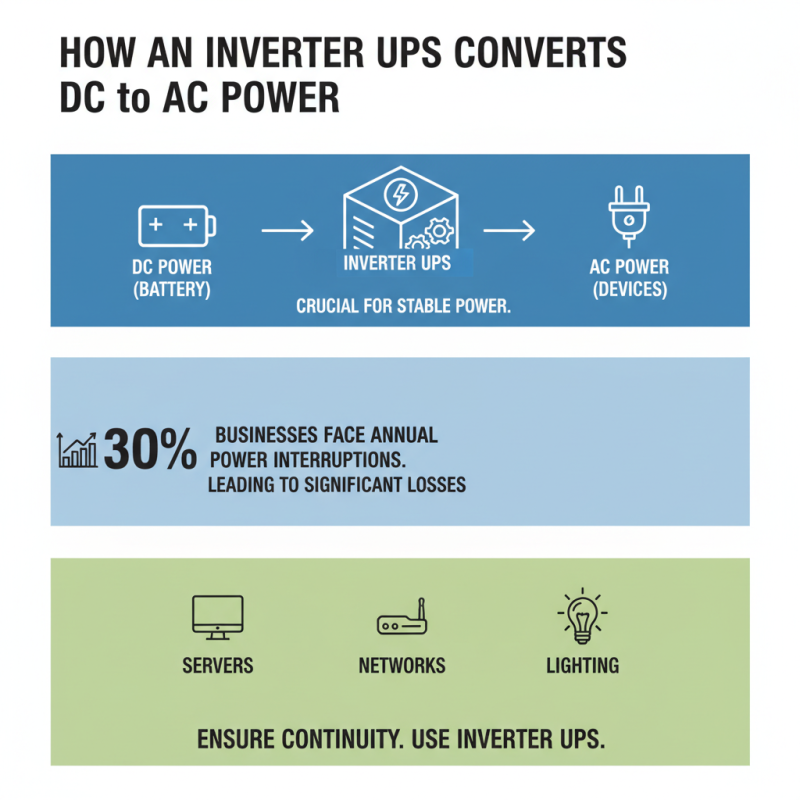
An inverter UPS is crucial for ensuring a stable power supply during outages. It primarily functions by converting DC power to AC power. This is essential for running devices that require AC current. According to industry reports, around 30% of businesses experience power interruptions each year. This can lead to significant losses.
The process starts with the inverter taking in DC power from a battery source. Inside the inverter, a system of transistors and capacitors converts this DC into AC. This AC power then powers connected devices. A typical inverter UPS might achieve an efficiency rate of up to 95%. However, this efficiency can drop depending on the load. A load of over 80% may lead to reduced performance.
Many users overlook the importance of maintenance. Regular checks can prolong the life of the UPS and prevent unexpected failures. Yet, if not properly managed, users can face substantial risks. Data from recent studies indicate that approximately 40% of UPS systems fail during critical power outages due to insufficient maintenance.
Working Mechanism of Inverter UPS During Power Outages
An inverter uninterruptible power supply (UPS) is essential during power outages. It converts direct current (DC) to alternating current (AC). This process allows devices to run without interruption when the main power fails. According to industry reports, inverter UPS systems can provide backup power for several hours, depending on battery capacity.
During an outage, the inverter UPS automatically switches on. It draws power from its batteries. This transition usually takes less than a minute. Many systems feature smart technology that helps optimize battery use. Reports indicate that UPS failures can cost businesses thousands in lost productivity. Therefore, understanding their mechanism is crucial for reliable power protection.
While inverter UPS systems are effective, they are not foolproof. Over time, batteries degrade and may fail to hold a charge. Regular maintenance is often overlooked, leading to unexpected failures. Users must remember to test and replace batteries as needed. This ensures the system can function properly in emergencies. A comprehensive approach to battery management can enhance reliability significantly.
Inverter UPS Performance During Power Outages
This chart illustrates the efficiency of an Inverter UPS during power outages, showcasing its capability to maintain power supply across various durations of outages.
Benefits of Using an Inverter UPS for Power Backup
Inverter UPS systems are becoming increasingly popular for power backup solutions. These systems convert DC power to AC power, ensuring a stable power supply. A report from MarketsandMarkets estimates that the inverter UPS market will grow by 8.3% annually until 2025. This growth highlights the rising awareness of the need for reliable power backup in both residential and commercial sectors.
One significant benefit of an inverter UPS is its ability to provide clean and uninterrupted power. According to a report by ResearchAndMarkets, power interruptions cost businesses $150 billion annually. An inverter UPS eliminates disruptions, protecting sensitive equipment from damage. This reliability is crucial in sectors like IT and healthcare, where downtime can lead to severe consequences.
However, choosing the right inverter UPS can be challenging. Users often overlook details like inverter capacity and battery backup time. A mismatched system could lead to inadequate power during outages. Configuring an inverter UPS properly requires time and understanding. It's essential to evaluate specific needs before making a purchase.

 Mobile Generator