
 Mobile Generator







Cash Flow Deep Dive 3 Years of a 150 kW Container Peak Shaving System
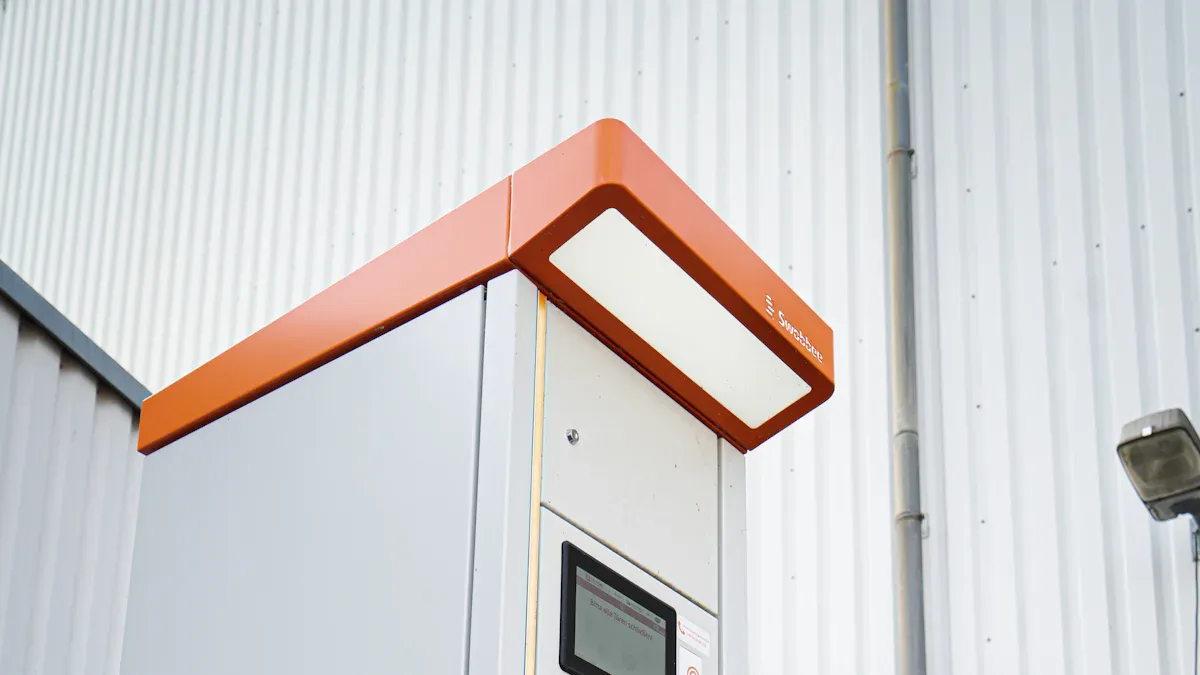
This article explores the financial viability of a 150 kW/300 kWh container peak shaving system. Readers will learn to analyze initial investment, operational costs, and revenue generation. The guide uses a Google Sheet for this purpose. It details the steps for a comprehensive 3-year cash flow assessment.
Key Takeaways
- Peak shaving systems help businesses save money on electricity bills. They store power when it is cheap and use it when electricity is expensive.
- You can use a Google Sheet to track all costs and savings. This helps you see if a peak shaving system is a good investment over three years.
- Many things affect how much money you save. These include the system's cost, electricity prices, and how much your utility charges for peak use.
Understanding Container Peak Shaving Systems
What is Peak Shaving?
Peak shaving involves reducing electricity consumption from the grid during periods of high demand. Businesses implement this strategy to lower their peak demand charges, which utility companies often impose based on the highest power usage within a billing cycle. Effectively managing these peaks can lead to significant cost savings on electricity bills.
Key Specifications of a 150 kW/300 kWh System
A 150 kW/300 kWh system represents a specific type of battery energy storage solution. The "150 kW" indicates the system's maximum power output, meaning it can deliver 150 kilowatts of electricity at any given moment. The "300 kWh" signifies its total energy capacity, allowing it to supply 150 kW for two hours, or 75 kW for four hours, for example. This capacity makes it suitable for medium-sized commercial or industrial applications requiring substantial energy reserves for peak demand management. This particular configuration is a robust Container Peak Shaving solution.
Benefits of Battery Energy Storage for Peak Shaving
Battery Energy Storage Systems (BESS) offer numerous advantages for peak shaving. They store energy during periods of low demand and subsequently release this stored energy when demand increases. This process effectively levels the power supplied by the grid and eliminates the necessity of activating additional, often more expensive, power sources to meet peak loads. Implementing a Container Peak Shaving system enhances grid stability and provides financial benefits through reduced demand charges. It also offers operational flexibility for energy management.
Setting Up Your Google Sheet for Cash Flow
Creating a robust Google Sheet is fundamental for a thorough cash flow analysis. This digital tool organizes all financial data, allowing for dynamic calculations and clear visualization of the system's economic performance. A well-structured sheet simplifies complex financial modeling.
Essential Tabs for Financial Data
A comprehensive Google Sheet for this analysis typically includes several dedicated tabs. One tab, "Inputs," stores all initial assumptions and variable data. Another tab, "Initial Investment," details all upfront costs. "Operational Costs" tracks ongoing expenses, while "Revenue" calculates all income streams and savings. Finally, a "Cash Flow Summary" tab consolidates all data, presenting the annual and cumulative financial picture.
Key Data Inputs and Assumptions
Accurate data inputs are crucial for reliable results. Key inputs include the system's purchase price, installation fees, and permitting costs. Operational assumptions cover electricity rates, peak demand charges, maintenance schedules, and battery degradation rates. Realistic assumptions about future energy prices and potential incentives significantly impact the model's accuracy. Businesses must carefully consider these variables.
Core Formulas for Cash Flow Calculations
The sheet's core involves calculating annual net cash flow by subtracting total outflows from total inflows. Analysts use specific financial metrics to evaluate the project's long-term value. Net Present Value (NPV) helps determine if an investment is worthwhile by discounting future cash flows to their present value. A positive NPV indicates a potentially profitable project. The formula for NPV is:
NPV = Σ [FCt / (1 + k)^t] - II Here, FCt represents cash flow for period t, k is the minimum required rate of return, and II is the initial investment. Another crucial metric is the Internal Rate of Return (IRR). This rate makes the present value of cash inflows equal to the initial investment, resulting in a net present value of zero. Projects with an IRR lower than the cost of capital are typically not recommended. The formula for IRR is:
0 = Σ [FCt / (1 + kIRR)^t] - II In this formula, kIRR represents the IRR rate. These formulas provide critical insights into the financial viability of the container peak shaving system.
Initial Investment for Container Peak Shaving
System Purchase and Installation Costs
The initial investment for a Container Peak Shaving system primarily involves the core equipment. This includes the battery Energy Storage Unit, power conversion systems, and the robust container housing. These components typically represent the largest portion of the upfront capital expenditure. Installation costs also contribute significantly to the total. These cover essential site preparation, such as laying a stable foundation and digging electrical trenches. Labor for assembling, wiring, and commissioning the entire system adds to these expenses. Businesses must budget carefully for these substantial outlays to ensure a successful deployment.
Permitting and Interconnection Fees
Regulatory compliance necessitates specific financial allocations. Permitting fees cover all necessary local building and electrical permits. These costs vary significantly based on municipal requirements and project scope. Interconnection fees are charges from the local utility company. They cover the expenses associated with safely connecting the battery system to the electrical grid. These fees ensure the system operates reliably and in compliance with all grid standards. Project developers must account for these variable administrative costs early in the planning phase.
Contingency and Project Setup Costs
Prudent financial planning always includes a contingency budget. This allocation covers unforeseen expenses or potential project delays. Unexpected site conditions, minor design modifications, or supply chain issues can incur additional costs. Project setup also involves other essential expenditures. These include detailed engineering design services, professional project management oversight, and legal fees for contract reviews and compliance. These costs ensure the project proceeds smoothly, meets all technical specifications, and adheres to legal requirements, safeguarding the overall investment.
Operational Expenses Over Three Years
Operational expenses significantly influence the long-term financial viability of a container peak shaving system. Businesses must carefully account for these ongoing costs. They directly impact the system's profitability over its operational lifespan.
Scheduled and Unscheduled Maintenance
System owners incur costs for both scheduled and unscheduled maintenance. Scheduled maintenance includes routine inspections, software updates, and component checks. These activities ensure optimal performance and extend the system's life. Unscheduled maintenance addresses unexpected repairs or component failures. These unforeseen events require prompt attention to minimize downtime. Businesses typically allocate a percentage of the initial investment for these maintenance activities annually.
Insurance and Monitoring Services
Protecting the investment requires adequate insurance coverage. This insurance typically covers property damage, liability, and business interruption. Monitoring services provide continuous oversight of the system's performance. These services track key metrics, identify potential issues, and alert operators to anomalies. Remote monitoring helps maintain efficiency and prevents costly failures. These recurring costs are essential for risk management and operational continuity.
Battery Degradation and Replacement Planning
Batteries naturally degrade over time. Their capacity to store and discharge energy diminishes with each cycle. This degradation impacts the system's effectiveness for peak shaving. Businesses must plan for eventual battery replacement. They should factor in the cost of new battery modules and installation. This long-term planning ensures the system maintains its intended performance levels.
Auxiliary Power Consumption Costs
The container peak shaving system itself consumes a small amount of power. This auxiliary power operates internal components like cooling systems, control electronics, and safety features. These components ensure the battery operates within safe temperature ranges and maintains optimal conditions. Businesses include these energy costs in their operational expense calculations. They represent a minor but necessary ongoing expenditure.
Revenue Streams and Savings Over Three Years
A container peak shaving system generates significant financial benefits. These benefits come from various revenue streams and cost savings. Businesses must accurately quantify these advantages for a complete financial picture.
Peak Demand Charge Reduction Calculation
The primary financial benefit comes from reducing peak demand charges. Utility companies charge commercial and industrial customers based on their highest power usage during a billing cycle. The battery system discharges stored energy during these peak periods. This action lowers the facility's demand from the grid. Businesses calculate savings by multiplying the reduced peak demand (in kW) by the utility's demand charge rate. This direct cost avoidance significantly impacts operational budgets.
Energy Arbitrage Opportunities
Energy arbitrage offers another revenue stream. The system stores electricity when prices are low, typically during off-peak hours. It then discharges this stored energy when electricity prices are high, usually during peak demand times. This strategy allows businesses to buy low and sell high, or simply avoid purchasing expensive grid power. This intelligent energy management enhances overall profitability.
Ancillary Services Revenue Potential
Battery energy storage systems can also participate in ancillary services markets. These services help maintain grid stability and reliability. Examples include frequency regulation and voltage support. Grid operators pay participants for providing these services. A 150 kW system can offer these capabilities, creating an additional revenue stream. This participation diversifies the system's financial contributions.
Available Incentives and Rebates
Various incentives and rebates can further enhance the system's financial viability. Government agencies or local utilities often offer programs to encourage battery storage adoption. These can include tax credits, grants, or performance-based incentives. Businesses should research available programs in their region. These financial aids reduce the initial investment or provide ongoing payments, improving the project's return on investment.
Building the 3-Year Cash Flow Statement
Creating a comprehensive 3-year cash flow statement provides a clear financial roadmap for the container peak shaving system. This statement systematically tracks all money entering and leaving the project. It offers crucial insights into the system's financial performance over time.
Annual Breakdown of Inflows and Outflows
Businesses begin by meticulously categorizing all financial transactions. They separate these into inflows and outflows for each of the three years. Inflows represent all money received or saved. This includes peak demand charge reductions, energy arbitrage gains, ancillary services revenue, and any available incentives or rebates. Each of these revenue streams contributes to the system's financial benefits.
Outflows encompass all expenditures. This category includes the initial investment costs, such as system purchase, installation, permitting, and contingency. It also covers ongoing operational expenses like maintenance, insurance, monitoring services, battery degradation planning, and auxiliary power consumption. Organizing these items annually allows for a clear picture of the financial movements.
Calculating Net Cash Flow Annually
After itemizing all inflows and outflows, the next step involves calculating the net cash flow for each year. This calculation reveals the project's financial health at specific points in time. Net cash flow represents the difference between the total money received and the total money spent within a given period.
To determine net cash flow, one subtracts total disbursements from total receipts at the end of each period. The formula for this calculation is straightforward:
Net cash flow = Total cash receipts – Total cash disbursements + Liquid funds.
For instance, if a system generates $50,000 in savings and revenue in Year 1, but incurs $100,000 in initial investment and $10,000 in operational costs, its net cash flow for Year 1 would be a negative figure. Subsequent years typically show positive net cash flows as initial investments are absorbed and operational savings continue. This annual calculation provides a snapshot of profitability.
Analyzing Cumulative Cash Flow
Analyzing cumulative cash flow offers a broader perspective on the project's financial trajectory. Cumulative cash flow sums the net cash flow from the current year with all previous years. This metric shows the total financial position of the project from its inception.
A negative cumulative cash flow indicates the project has not yet recovered its initial investment. As the system generates more savings and revenue, the cumulative cash flow gradually increases. The point at which cumulative cash flow turns positive signifies the project has reached its payback period. This means the system has generated enough financial benefits to cover all its costs. Tracking this metric helps stakeholders understand when the investment becomes profitable and begins to generate net gains. It provides a clear visual representation of the project's overall financial progress.
Interpreting Key Financial Performance Metrics
Understanding the financial performance of a battery energy storage system requires evaluating several key metrics. These metrics provide clear insights into the project's profitability and risk. They help stakeholders make informed decisions about the investment.
Determining the Payback Period
The payback period is a crucial metric for assessing an investment's liquidity. It indicates the time required for an investment to generate enough cash flow to recover its initial capital outlay. As Assaf Neto and Lima (2011) describe, this method calculates the time needed for the capital spent on an investment to be recovered by its cash flow. Gitman (2010) further elaborates that it represents the time required to recover the initial cash outlay on a project, determined from its net cash flow. For a Container Peak Shaving system, a shorter payback period generally indicates a more attractive investment. Businesses calculate this by observing when the cumulative cash flow turns positive.
Calculating Return on Investment (ROI)
Return on Investment (ROI) measures the profitability of an investment. It expresses the financial gain or loss in relation to the initial cost. Businesses use ROI to compare the efficiency of different investments. The formula for calculating Return on Investment involves subtracting the investment from the return, dividing the result by the investment, and then multiplying by 100 to express it as a percentage. The investment includes the initial capital and any additional expenses incurred during the project. A higher ROI signifies a more efficient and profitable investment.
Performing Sensitivity Analysis for Container Peak Shaving
Sensitivity analysis evaluates how different variables impact a project's financial outcomes. It helps identify the most critical factors affecting profitability. This analysis involves changing one input variable at a time while holding others constant. For a battery energy storage system, several variables can significantly influence financial performance. Businesses commonly include these factors in their sensitivity analysis:
- Capital costs (CAPEX)
- Operating costs (OPEX)
- Battery degradation
- Electricity prices
- Revenue streams (e.g., arbitrage, ancillary services)
- Discount rate
- Project lifetime
- Inflation rate
- Tax incentives
By performing sensitivity analysis, investors can understand the project's resilience to changes in market conditions or operational assumptions. This process helps in risk assessment and strategic planning.
Advanced Considerations for Container Peak Shaving
Impact of Electricity Rate Fluctuations
Electricity rate fluctuations significantly affect the financial performance of a peak shaving system. Changes in demand charges directly influence savings. Higher demand charges increase the financial benefits derived from reducing peak consumption. Conversely, lower demand charges diminish these savings. Energy prices also play a crucial role. Volatile energy markets create more opportunities for energy arbitrage, allowing systems to buy power when cheap and sell or use it when expensive. Stable or consistently low energy prices reduce these arbitrage opportunities. Businesses must regularly update their financial models with current and projected electricity rates.
Adapting the Model for Different System Sizes
Businesses adapt the financial model for various system sizes by adjusting key inputs. A larger system, for example, requires a higher initial capital expenditure. It also typically offers greater potential for demand charge reduction and energy arbitrage revenue. Smaller systems have lower upfront costs but provide more limited financial returns. Users must scale operational expenses, such as maintenance and insurance, according to the system's capacity. The model's core logic remains consistent, but the magnitude of costs and revenues changes proportionally with the system's power and energy ratings.
Risk Assessment for Peak Shaving Profitability
Several risks can impact peak shaving profitability. Regulatory changes pose a significant threat; governments or utilities might alter demand charge structures or introduce new tariffs. Technological risks include faster-than-expected battery degradation or component failures, increasing maintenance costs. Market risks involve sustained periods of low electricity prices, which reduce arbitrage opportunities. Operational risks, such as system downtime, also affect profitability. Businesses mitigate these risks through thorough due diligence, robust maintenance contracts, and scenario planning within their financial models.
This guide equips readers with the Google Sheet methodology for BESS cash flow analysis. It enables informed investment decisions for Container Peak Shaving systems. Readers gain confidence in assessing financial viability. This comprehensive approach ensures a clear understanding of project economics.
FAQ
How long does a peak shaving system take to pay for itself?
The payback period varies. It depends on initial investment, operational costs, and local electricity rates. Businesses typically see returns within a few years.
What factors most influence a peak shaving system's profitability?
Key factors include capital costs, electricity prices, and demand charges. Battery degradation and available incentives also significantly impact profitability.
Can a smaller business benefit from a peak shaving system?
Yes, smaller businesses can benefit. The financial model adapts to different system sizes. Even smaller systems offer demand charge reductions and energy arbitrage opportunities.