
 Mobile Generator




Essential Guide to Power-Banks for Outdoor Camping Trips

A reliable power-bank empowers campers to keep every device ready for action. High capacity meets lightweight design, while rugged construction stands up to the elements. Fast charging ensures no one waits long for power. Smart shoppers choose models that deliver value, durability, and convenience on every adventure.
Key Takeaways
- A power-bank keeps your devices charged and ready, ensuring safety and comfort during camping trips.
- Choose a power-bank with enough capacity, durability, and fast charging to match your trip length and device needs.
- Look for extra features like waterproofing, multiple ports, and solar charging to enhance convenience and reliability outdoors.
Why a Power-Bank Is Essential for Camping
Staying Connected and Safe
Campers rely on their devices for navigation, communication, and safety. A power-bank ensures that phones, GPS units, and emergency radios stay charged, even in remote areas. Many outdoor enthusiasts bring power banks to power essential devices such as lights, fans, and cooking gear. This keeps the campsite comfortable and safe after dark. Reliable power also means campers can call for help or check weather updates when needed.
Tip: Always keep your power-bank fully charged before heading out. This simple step can make a big difference in an emergency.
Powering Multiple Devices
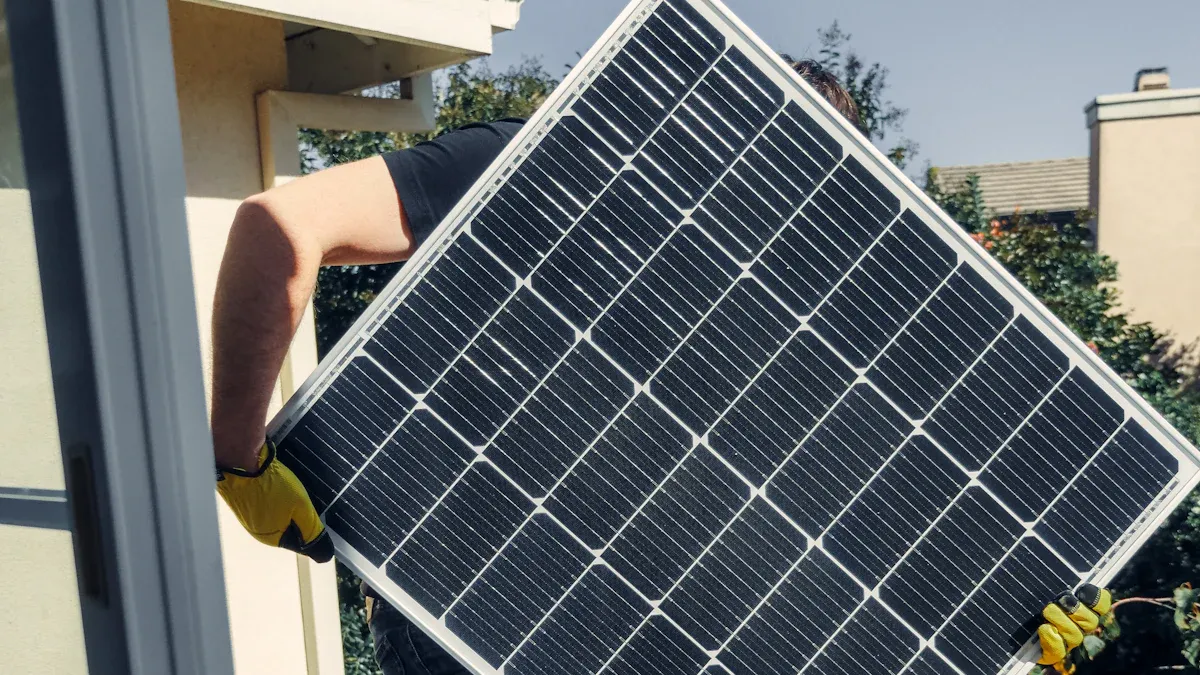
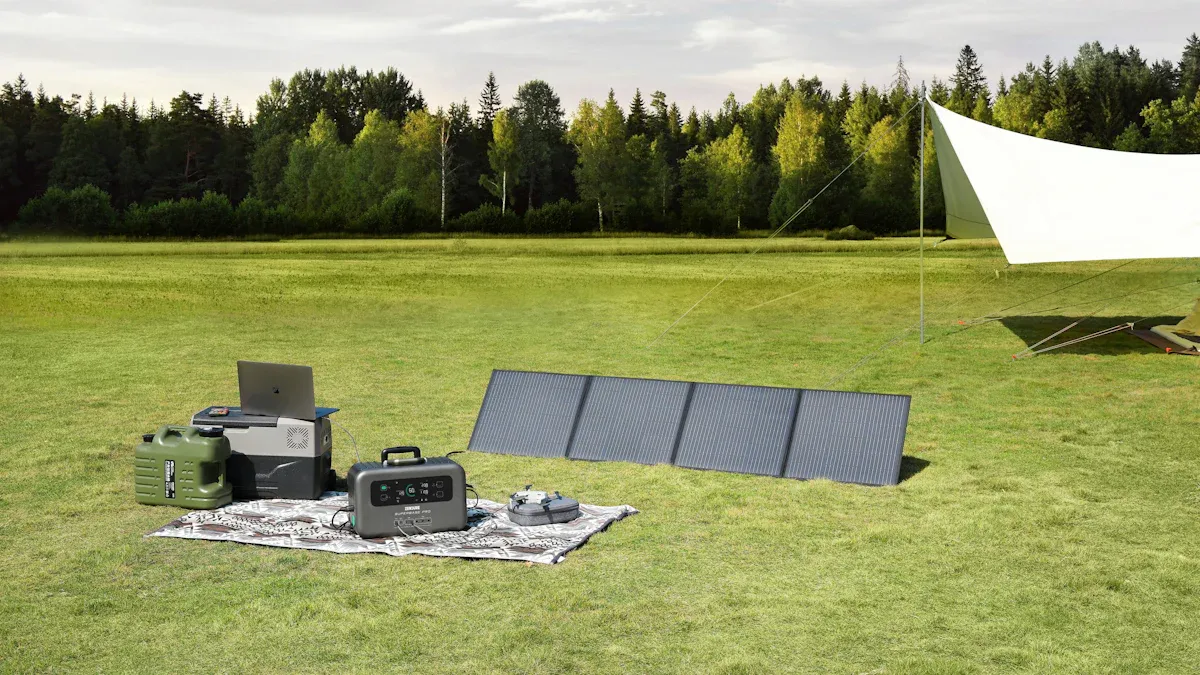
Modern campers carry more than just a phone. They often bring cameras to capture memories, tablets for reading, and other outdoor gadgets. A quality power-bank can charge several devices at once, thanks to multiple USB ports and AC outlets. Campers value rugged, waterproof models with at least 20,000mAh capacity for weekend trips. Solar charging stations and wireless charging features add even more convenience, especially for families or groups.
- Smartphones for navigation and emergencies
- Cameras for capturing landscapes
- Tablets for entertainment
- GPS devices for preparedness
Emergency Preparedness
Unexpected situations can arise outdoors. A power-bank provides peace of mind by keeping critical devices powered during storms, power outages, or medical emergencies. Many campers choose models with smart battery management systems that prevent overcharging and extend battery life. Rugged, impact-resistant designs ensure the power-bank works even in harsh conditions. Flexible charging options, including solar panels and car chargers, help maintain power in any scenario.
Key Factors When Choosing a Camping Power-Bank

Battery Capacity (mAh)
Battery capacity stands as the most critical factor for campers who want reliable power in the wild. For short weekend trips, a 5,000–10,000mAh power-bank can keep a phone and headlamp running. Multi-day adventures demand more—either two 10,000mAh units or a single 20,000mAh model. This approach not only provides redundancy but also makes packing easier. Campers who plan to charge laptops, cameras, or drones should look for capacities above 20,000mAh and consider pairing with a solar panel for backup. Actual usable capacity is about 70-75% of the rated figure due to energy loss, so planning ahead prevents surprises.
| Trip Duration / Style | Recommended Battery Capacity (mAh) | Typical Devices Charged | Notes / Additional Advice |
|---|---|---|---|
| Weekend Warrior (2-4 days) | 5,000–10,000 | Phone, headlamp | No fast charging needed |
| Multi-day (4-7 days) | Two 10,000 or one 20,000 | Phone, GPS, headlamp, watch | Look for 18W+ output; 70-75% usable capacity |
| Basecamp / Research Style | 20,000 or higher + solar panel | Laptop, camera, drone, tablet | Needs PD output (18W+); solar panel as backup |
Tip: Always calculate your device needs and add a buffer for cold weather or unexpected use.
Weight and Portability
Weight can make or break a camping experience. Heavier power banks, especially those above 20,000mAh, add significant bulk—often over 12 ounces (340 grams). Many backpackers choose smaller 10,000mAh models to keep their packs light while still meeting essential needs like navigation and photography. Some hikers prefer carrying two smaller chargers for flexibility and redundancy. The trade-off between capacity and weight shapes every gear decision. Campers who prioritize ultralight travel often recharge in towns rather than carry extra weight.
- Heavier models add bulk, similar to carrying extra food.
- Smaller units offer weight savings and easier packing.
- Multiple small chargers provide backup in case of failure.
Durability and Weather Resistance
Outdoor adventures demand rugged gear. Power banks with high durability ratings, such as IP67, resist dust and water, surviving drops into puddles or exposure to rain. These features protect devices from damage during rough handling or bad weather. Brands like Goal Zero and ToughTested design models specifically for harsh environments, ensuring continuous power even in challenging conditions.
| Power Bank Model | IP Rating | Durability & Weather Resistance Description | Additional Notes |
|---|---|---|---|
| NestOut | IP67 | Dustproof, water-resistant, drop-proof | Ideal for harsh outdoor use |
| Oupes Mega 1 | IP21 | Limited dust/water resistance | Needs careful handling |
| Bluetti AC60 | None | No weather protection | Must be kept dry |
Rugged construction with waterproofing and shock resistance ensures reliable power in any weather.
Charging Speed and Output Ports
Fast charging saves time and keeps devices ready for action. Campers value power banks with USB-C and USB-A ports, supporting technologies like Quick Charge (QC 3.0) and Power Delivery (PD). Output power of 18W or higher charges tablets and laptops efficiently. Multiple ports allow simultaneous charging of phones, cameras, and GPS units. Quick input charging, especially via USB-C PD, means less downtime when recharging the power-bank itself.
- At least two output ports (USB-A or USB-C) recommended.
- Fast charging (QC 3.0, PD) reduces wait times.
- Output power of 18W+ ideal for larger devices.
- Multiple ports support group or family camping.
Special Features (Solar, Flashlight, Wireless Charging)
Special features set some power banks apart. Solar charging offers renewable energy, perfect for extended trips or emergencies. However, solar charging works best as a backup, since it depends on sunlight and charges slowly. Integrated flashlights add safety and convenience at night. Wireless charging pads eliminate cable clutter, letting campers top up phones with ease. Durable models often include these extras, making them versatile tools for any outdoor scenario.
- Solar charging provides eco-friendly backup power but works slowly and only in good sunlight.
- Built-in flashlights improve campsite safety.
- Wireless charging adds convenience for compatible devices.
Note: Solar charging is best for maintaining charge, not rapid recharging. Always bring traditional charging options for reliability.
Price and Value
High-quality camping power banks range from $30 to $170+, depending on capacity, features, and brand reputation. Models between 10,000mAh and 26,800mAh offer the best balance for most campers. Value comes from a mix of capacity, charging speed, durability, and extra features like solar panels or multiple ports. Trusted brands such as Anker and RAVPower deliver reliability and safety certifications, ensuring long-term performance. Lower-priced options may lack durability or safety features, so investing in a reputable model pays off over time.
| Aspect | Details |
|---|---|
| Average Price Range | $30 to $170+ |
| Capacity Range | 10,000mAh to 26,800mAh |
| Value Factors | Capacity, charging speed, brand reliability, safety, durability, extra features |
| Longevity | 2-3 years or 300-500 full charge cycles |
| Safety Certifications | UL, CE, FCC |
Choose a power-bank that balances price, features, and brand reputation for the best value and peace of mind.
Top Power-Bank Picks for Camping
Best Overall Power-Bank – Anker PowerCore 26800
The Anker PowerCore 26800 stands out as the top choice for most campers. Its impressive 26,800 mAh battery capacity ensures multiple device charges during extended trips. With three USB-A output ports, campers can charge several devices at once, keeping phones, cameras, and GPS units ready for action. Dual microUSB inputs allow for a faster recharge, reaching full capacity in about 6.5 hours. The compact design and moderate weight (495 grams) make it easy to pack without sacrificing performance. Anker’s reputation for reliability and the PowerCore’s robust construction make it a dependable companion for any outdoor adventure.
| Specification | Anker PowerCore 26800 |
|---|---|
| Battery capacity | 26800 mAh (nominal), 16900 mAh (real) |
| USB output ports | 3 USB A ports |
| Charging inputs | Dual microUSB |
| Full charge time | ~6.5 hours |
| Weight | 495 g |
| Dimensions | 178 x 81 x 23 mm |
The real capacity of 16,900 mAh means campers can expect reliable power for multiple full phone charges, which is crucial when off the grid.
Best Budget Power-Bank – RAVPower 16750mAh
RAVPower 16750mAh delivers excellent value for budget-conscious campers. It offers a generous 16,750 mAh capacity, enough to charge a smartphone several times or power a tablet and a camera on a weekend trip. Dual USB outputs let users charge two devices simultaneously, while built-in safety features like over-current and short circuit protection provide peace of mind. The integrated flashlight proves handy during nighttime emergencies or tent setup. Compared to other budget models, RAVPower’s iSmart technology and premium battery cells ensure efficient, reliable charging without breaking the bank.
| Feature | RAVPower 16750mAh |
|---|---|
| Capacity | 16,750 mAh |
| USB Outputs | 2 |
| Safety Features | Over-current, short circuit |
| Extra | Built-in flashlight |
Campers seeking a balance of price, performance, and safety will find this power-bank a smart investment.
Best Power-Bank for Large Devices – 600W Life-Grade Portable Power Station Backpack
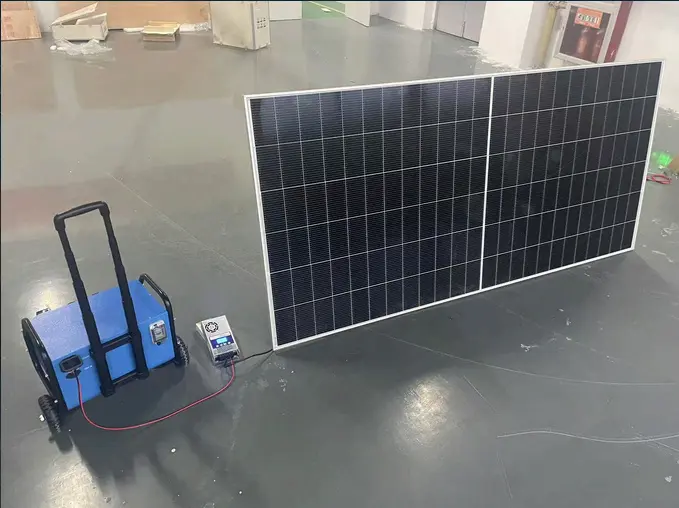
For campers who need to power more than just phones, the 600W Life-Grade Portable Power Station Backpack redefines outdoor energy solutions. This portable station supports a continuous AC output of 600W and a peak of 1200W, making it possible to run small rice cookers, projectors, or car refrigerators directly at the campsite. The vehicle-grade lithium iron phosphate battery ensures long-lasting performance and safety, even in extreme temperatures. Multiple USB-A ports with QC3.0 fast charging, a 100W PD Type-C port, and three 220V AC sockets provide unmatched versatility. The 15W Qi wireless charging pad adds convenience for modern devices. Quick recharge options—wall socket, solar panel, car, or generator—guarantee power in any scenario. Campers who demand household-level electricity in the wild will appreciate the freedom and reliability this power station delivers.
The 600W Life-Grade Portable Power Station Backpack transforms camping by powering everything from laptops to kitchen appliances, ensuring comfort and convenience far from home.
Most Durable Power-Bank – Goal Zero Venture 70
Goal Zero Venture 70 sets the standard for durability in outdoor environments. Its IP67 certification means the device is both dustproof and waterproof, capable of surviving submersion in up to one meter of water for 30 minutes—even with open USB ports. The rugged, rubberized casing withstands drops, bumps, and harsh weather, making it ideal for backcountry adventures. Campers who face unpredictable conditions trust the Venture 70 to keep their devices powered and protected.
The Venture 70’s robust design and waterproof rating make it the go-to choice for those who refuse to let the elements slow them down.
Best Solar Power-Bank – BigBlue 28W Solar Charger
BigBlue 28W Solar Charger excels in harnessing sunlight for reliable outdoor power. Its high-efficiency solar cells achieve up to 25.4% conversion, outperforming many competitors in both direct and indirect sunlight. With three USB output ports delivering a total of 5V/4.8A, campers can charge multiple devices at once. The durable, scratch-resistant polyester fabric and IPX4 water resistance ensure the charger stands up to rugged use. Although it lacks a built-in battery, its ability to generate over 2,000 mAh per hour in strong sunlight makes it perfect for multi-day trips where access to electricity is limited.
Campers who prioritize renewable energy and efficient charging will find the BigBlue 28W Solar Charger a reliable companion for extended adventures.
Best Lightweight Power-Bank – Anker PowerCore 10000
Anker PowerCore 10000 offers a winning combination of portability and performance. Weighing just 7.5 ounces, it slips easily into any backpack or pocket. Despite its compact size, the 10,000 mAh capacity provides ample power for a smartphone and other small devices during a weekend trip. The device features both a USB-C and a standard USB port, supporting fast and flexible charging. Campers who count every ounce will appreciate the PowerCore 10000’s lightweight design without sacrificing essential power.
| Model | Weight (oz) | Capacity (mAh) | Ports |
|---|---|---|---|
| Anker PowerCore 10000 | 7.5 | 10,000 | USB-C, USB-A |
For ultralight backpackers and day hikers, this power-bank delivers dependable energy in a featherweight package.
Power-Bank Comparison Table for Camping
Key Specs and Features Overview
Choosing the right power-bank for camping means looking beyond just battery size. Campers should compare several key specifications to find the best fit for their needs:
- Capacity (mAh): Higher capacity means more device charges, but also more weight.
- Charging time: Fast recharge times keep campers powered up with less waiting.
- Output power (watts): Higher output charges devices more quickly; at least 5W is recommended.
- Size and weight: Lighter and smaller models are easier to carry on long hikes.
- Connection types: USB-A, USB-C, and Micro USB ports affect compatibility and speed.
- Durability: Waterproof and dustproof ratings (like IP65) protect against outdoor hazards.
- Extra features: Look for charge level indicators, short circuit protection, and air travel suitability.
Top-rated camping power banks show clear differences in battery capacity, weight, and charging speed. Some models focus on portability, while others deliver massive capacity for extended trips. The table below highlights these differences:
| Model | Battery Capacity | Weight | Max Charging Output | Notes on Charging Speed and Use Case |
|---|---|---|---|---|
| Anker Nano | 5,000mAh | 102g | 22.5W | Lightweight, portable, ideal for quick smartphone top-ups |
| Cuktech 15 Ultra | 20,000mAh | 595g | 210W | Heavy, ultra-fast charging for laptops and smartphones |
| MAXOAK | 50,000mAh | N/A | N/A | Massive capacity, best for long trips and multiple device charging |
| Crave PowerPack 2 | 50,000mAh | N/A | N/A | Similar to MAXOAK, designed for extended outdoor use |
Campers who compare these specs can confidently select a power-bank that matches their adventure style and device needs.
How to Choose the Right Power-Bank for Your Trip
Matching Power-Bank Features to Camping Scenarios
Selecting the right power-bank depends on the type of camping trip and the devices needed. Campers should consider these priorities:
- Battery Capacity: Weekend trips require at least 10,000mAh, while longer adventures benefit from higher capacities.
- Charging Speed: Quick Charge or Power Delivery support ensures fast recharging for busy campers.
- Durability: Water and dust resistance (IP ratings) protect against harsh outdoor conditions.
- Multiple Outputs: More ports allow charging several devices at once, perfect for group outings.
- Solar Options: Solar charging becomes essential for extended, off-grid trips.
A table can help campers match features to their scenario:
| Scenario | Must-Have Features |
|---|---|
| Solo Weekend | 10,000mAh, lightweight, 2 ports |
| Family Camping | 20,000mAh+, 3+ ports, fast charging |
| Remote Expedition | Solar, high durability, large capacity |
Tip: Always check for LED indicators to monitor battery status easily.
Tips for Maximizing Battery Life Outdoors
- Lower device screen brightness and turn off unnecessary notifications.
- Use airplane mode when possible to conserve energy.
- Charge critical devices first, such as phones or GPS units.
- Use high-quality cables for efficient charging.
- Pre-download maps and entertainment to reduce device usage.
Prioritizing essential devices ensures power lasts throughout the trip.
Maintenance and Safety Tips
- Store the power-bank in a cool, dry place away from direct sunlight.
- Inspect cables and ports regularly for damage.
- Recharge the power-bank every few months, even when not in use.
- Avoid exposing the device to extreme temperatures or moisture.
- Keep the power-bank out of reach of children and pets.
Regular care and safe storage extend the lifespan and reliability of your camping power solution.
Campers should focus on capacity, durability, charging speed, and trusted brands when selecting a power-bank. Matching features to trip needs ensures devices stay powered. Reliable models with rugged designs and safety features deliver peace of mind, making every outdoor adventure safer and more enjoyable.
FAQ
How long does it take to recharge a camping power-bank?
Most power-banks recharge in 4 to 8 hours. Fast-charging models, like those with USB-C PD, can finish in as little as 2 hours.
Can a power-bank run small appliances at a campsite?
Yes. High-capacity models, such as the 600W Life-Grade Portable Power Station Backpack, power small appliances like mini fridges, projectors, or rice cookers with ease.
Is it safe to leave a power-bank charging overnight?
Safety features like overcharge protection make overnight charging safe. Always use certified chargers and cables for the best results.