
 Mobile Generator




Off-grid solar keeps your business running strong
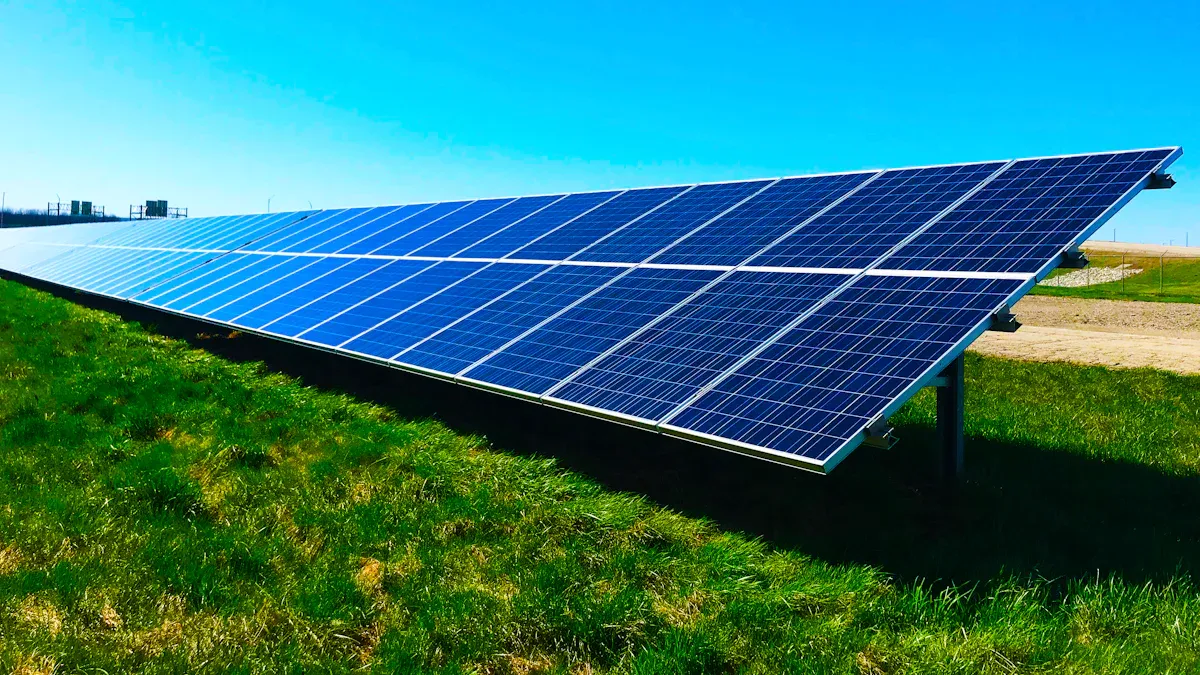
Businesses face significant losses during power outages. Power failures cost the U.S. economy about $150 billion each year. In some African countries, companies lose up to 31% of annual sales. Off-grid solar systems supply reliable power, helping organizations avoid downtime and maintain customer trust.
Key Takeaways
- Power outages cause big losses for businesses, but off-grid solar systems provide reliable power to keep operations running and protect revenue.
- Off-grid solar systems use solar panels, batteries, and inverters to store and supply energy during blackouts, offering clean and steady power independent of the grid.
- Investing in off-grid solar saves money over time through lower energy bills and tax incentives, while boosting business sustainability and customer trust.
The Impact of Blackouts on Business Revenue
Common Blackout Scenarios for Businesses
Blackouts disrupt operations in every industry. Severe weather and storms account for the majority of outages, with wind, rain, and lightning causing extensive damage to power infrastructure. Businesses in rural areas experience blackouts more frequently than those in urban centers due to weaker infrastructure and slower emergency response. The following table highlights the most common causes of outages affecting commercial properties:
| Cause Category | Description | Approximate Percentage of Outages |
|---|---|---|
| Severe Weather & Storms | Hurricanes, tornadoes, lightning, heavy rains, flooding, ice storms, heat waves, wildfires | 83% |
| Wind and Rain | Damage to power lines and infrastructure | 14.8% |
| Lightning | Strikes damaging lines and transformers | 11.5% |
| Cold Weather | Outages from freezing temperatures | 5.5% |
| Ice Storms | Ice accumulation damaging lines and trees | 5% |
| Hurricanes & Tropical Storms | Severe tropical weather events | 4.2% |
| Tornadoes | Infrastructure damage from tornadoes | 2.8% |
| Extreme Heat & Wildfires | Heat waves and wildfires damaging electrical components | 5% |
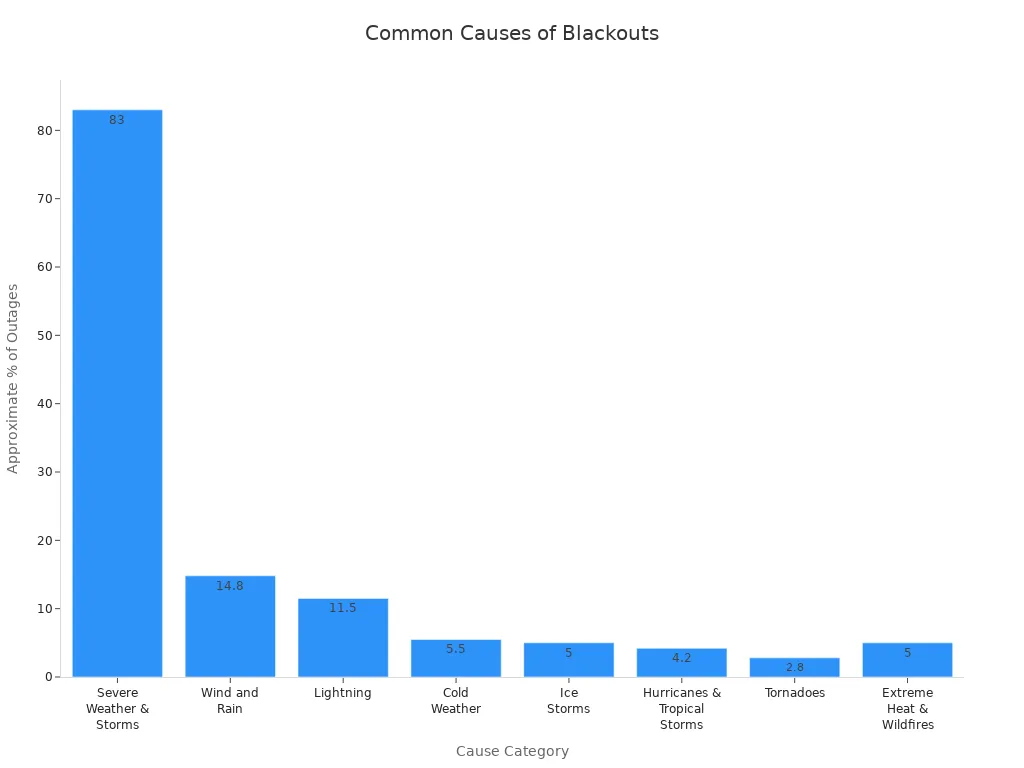
Rural businesses face a higher risk, with 35.4% of households experiencing outages annually compared to 22.8% in urban areas. Outage frequency doubles in some regions, especially during extreme weather.
Real-World Examples of Revenue Loss
Power outages lead to immediate financial losses. Data centers, manufacturers, retailers, and healthcare providers have all suffered significant impacts. For example, a lightning storm caused a Microsoft Azure data center outage, resulting in nearly $12 million in losses over 24 hours. A car manufacturer lost $60 million from a single day of downtime. Large manufacturers report losses exceeding $5 million per hour during outages. Retailers face merchandise losses up to $30,000 per day, while major chains risk millions in lost sales. Hospitals forced to evacuate during hurricanes experience operational setbacks and long-term financial strain.
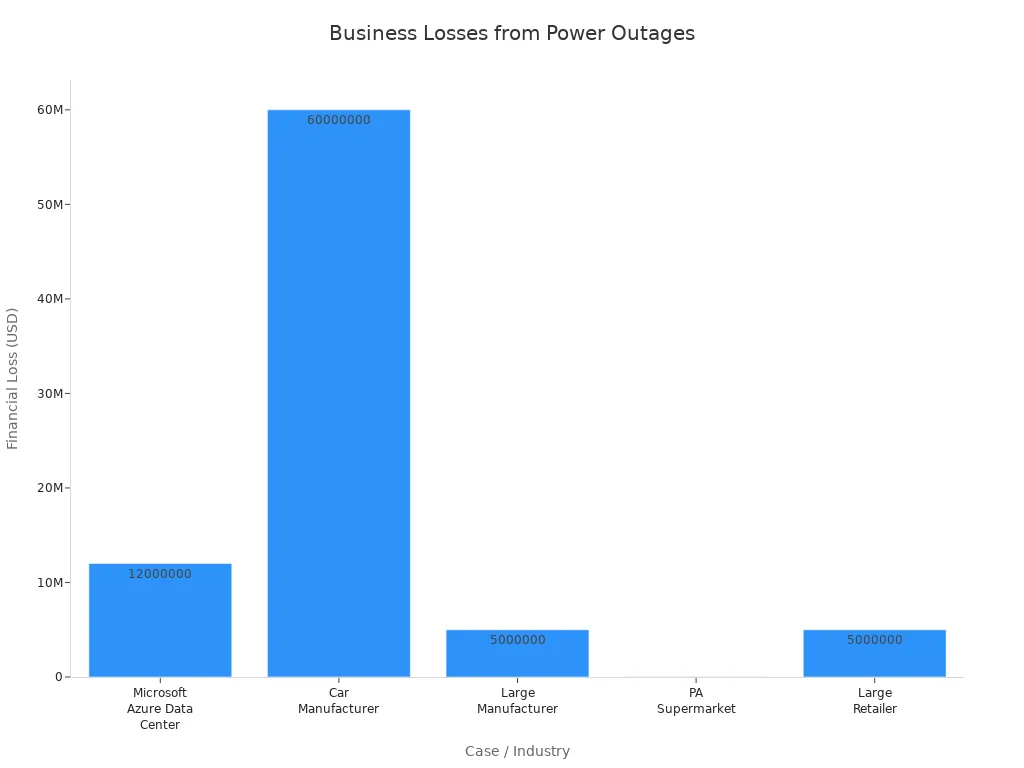
Frequent blackouts damage customer trust and brand reputation. Businesses must invest in reliable power solutions to protect revenue and maintain customer confidence.
Off-Grid Solar Solutions for Blackout Protection
Key Components of Off-Grid Systems
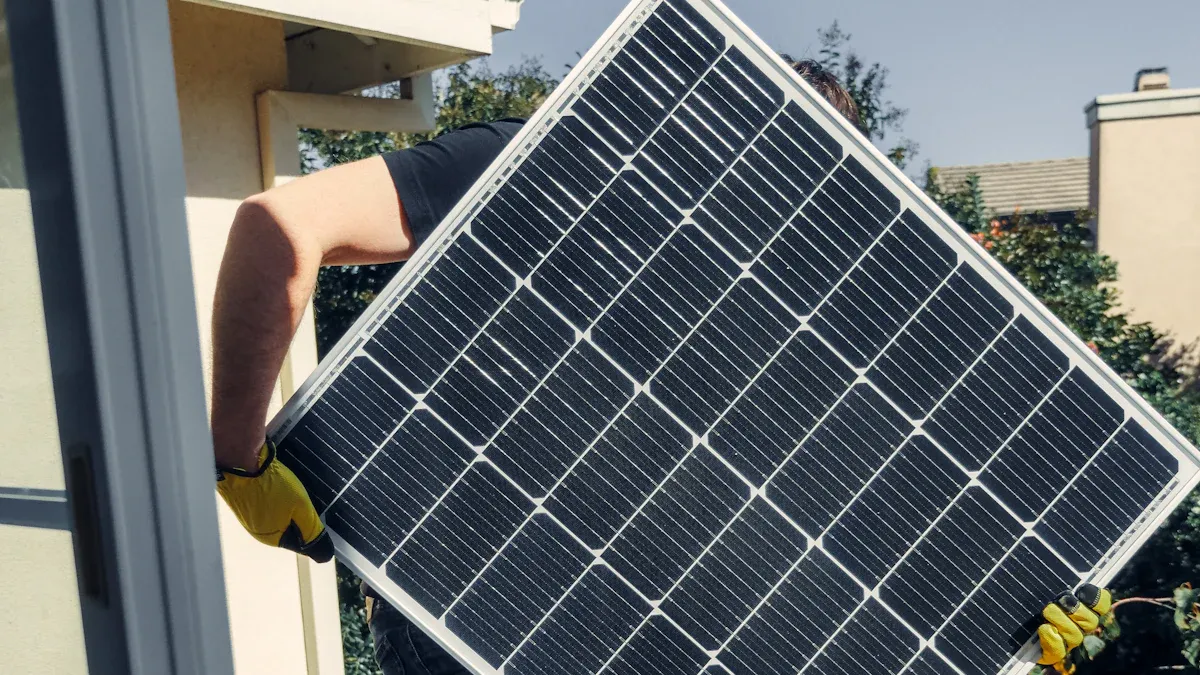
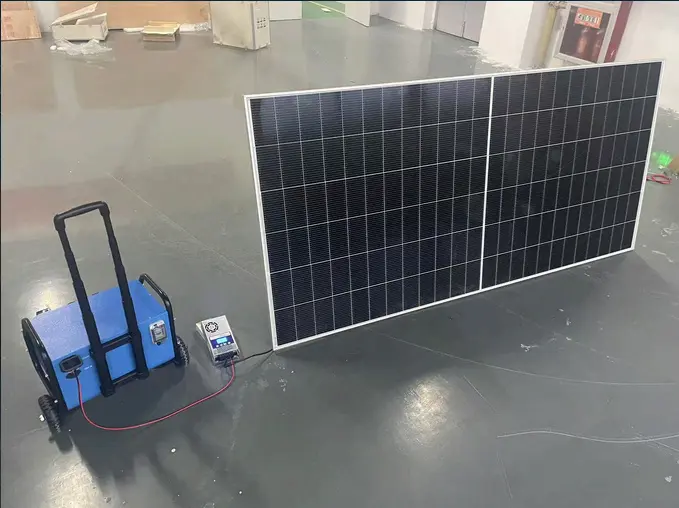
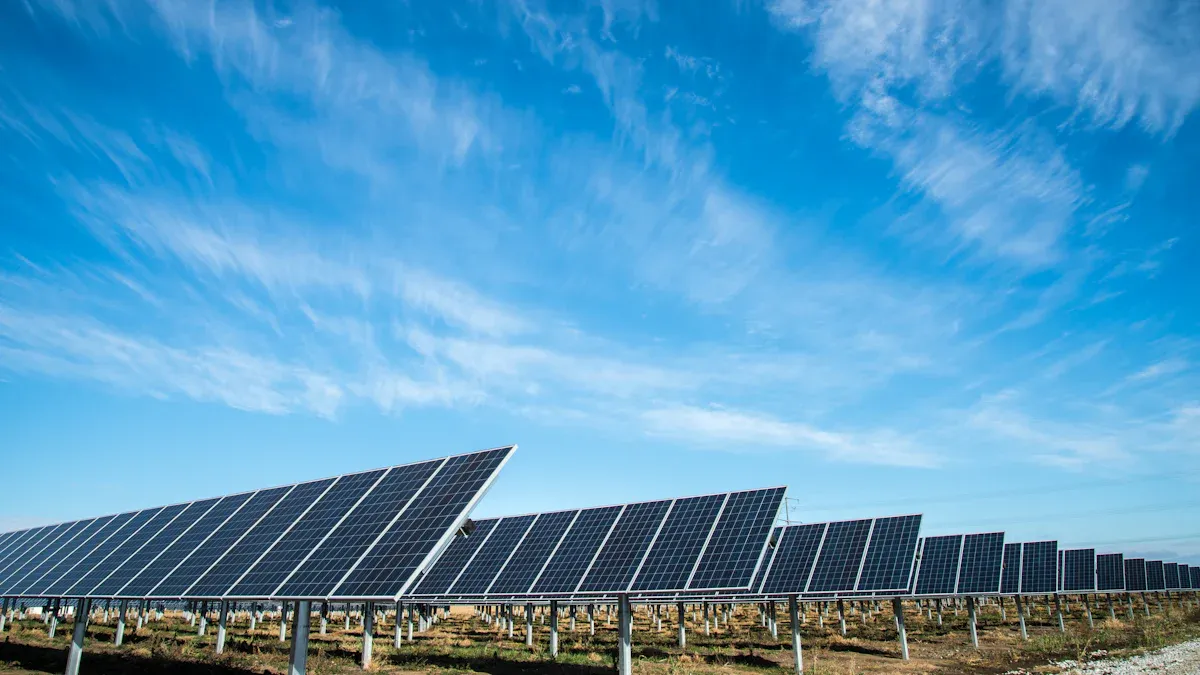
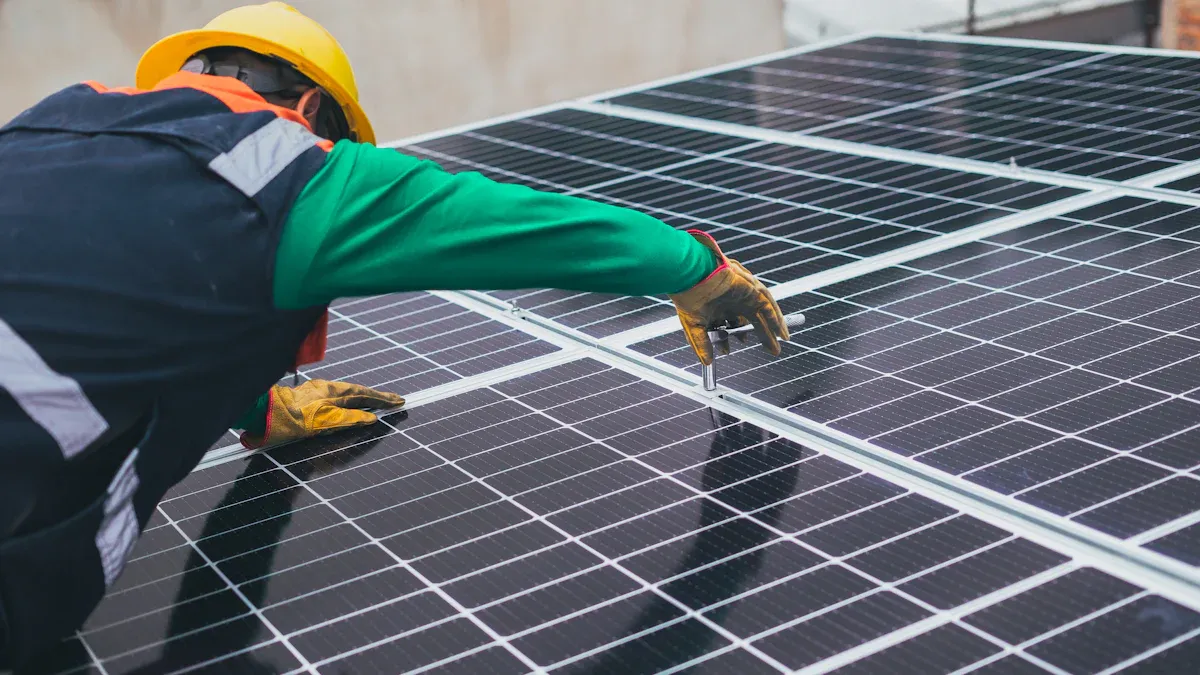
A commercial off-grid solar system relies on several essential components to deliver reliable power. The photovoltaic (PV) array captures sunlight and converts it into direct current (DC) electricity. PV disconnects isolate the solar array for safety during maintenance or emergencies. A charge controller regulates the flow of electricity, preventing battery overcharging and extending battery life. The battery bank stores energy for use during periods without sunlight, such as nighttime or cloudy days. An inverter transforms stored DC power into alternating current (AC), which powers commercial appliances and equipment. Safety devices, including fuses and circuit breakers, protect the system from electrical faults. Modern systems often use lithium iron phosphate batteries for their durability and safety advantages. Mounting systems secure solar panels, while disconnect switches allow for safe isolation of system parts.
Tip: Regular maintenance, such as cleaning solar panels and inspecting batteries, ensures optimal performance and longevity for off-grid solar systems.
Reliable Power During Outages
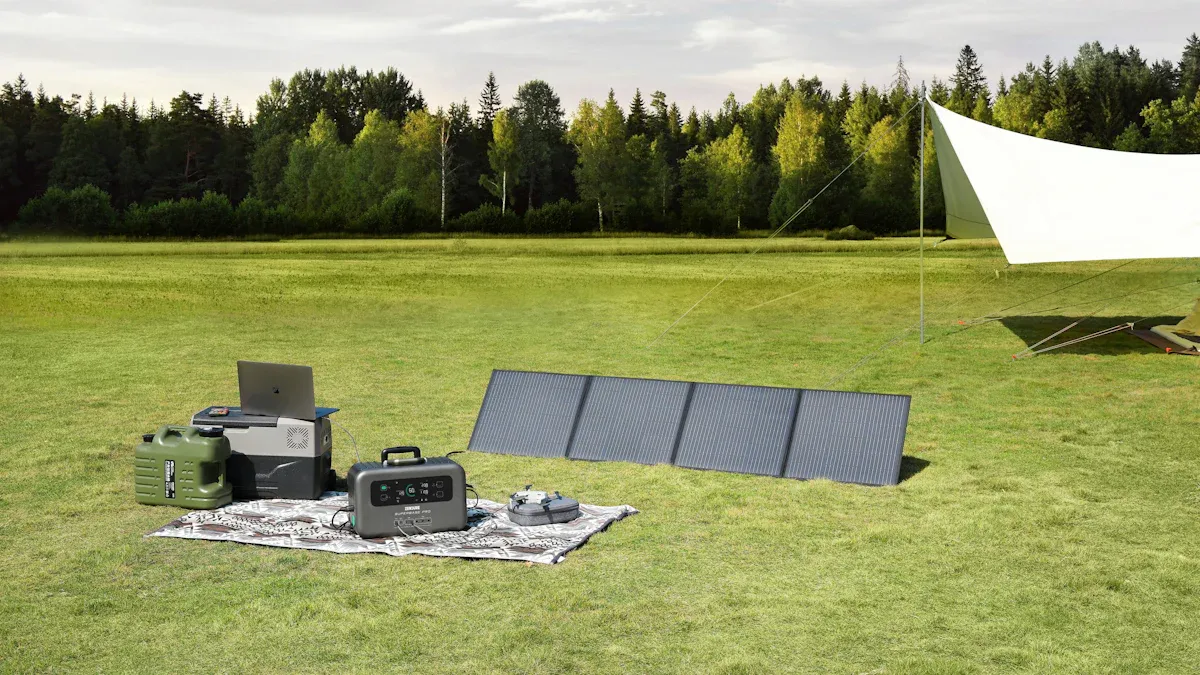
Off-grid solar systems provide businesses with uninterrupted power during blackouts. Batteries play a crucial role by storing excess energy generated during the day and supplying it when sunlight is unavailable. Inverters manage the charging and discharging of batteries, monitor battery health, and adjust power supply based on demand. These features guarantee a steady flow of electricity, protecting sensitive equipment and maintaining business operations. Unlike grid-tied solar, which shuts down during outages for safety, off-grid systems operate independently and avoid vulnerabilities caused by grid failures. Advanced battery technologies, such as stackable energy storage solutions, allow businesses to customize backup capacity and ensure critical loads remain powered.
| Feature/Aspect | Off-Grid Solar Systems (with Battery Storage) | Backup Generators |
|---|---|---|
| Power Source | Renewable solar energy, independent from grid | Fuel-powered (gasoline, propane, diesel) |
| Reliability During Blackouts | Reliable if properly sized and maintained; can provide power day and night with battery storage | Guaranteed power as long as fuel is available |
| Limitations | Dependent on sunlight to recharge batteries; may struggle during extended cloudy or snowy periods | Requires fuel supply; fuel availability can limit runtime |
| Maintenance | Requires battery replacements every few years and regular system checks | Requires regular maintenance and fuel management |
| Environmental Impact | Clean, quiet, no emissions | Produces noise, exhaust fumes, and carbon monoxide risk |
| Operational Constraints | Needs proper inverter and system design to operate during outages | Must be placed outdoors for safety; can be noisy |
| Capacity | Limited by battery storage size | Capacity limited only by fuel supply |
| Cost | Higher upfront cost due to batteries and equipment | Can be more cost-effective if backup power is rarely needed |
This comparison highlights the reliability and environmental benefits of off-grid solar systems. Businesses that depend on continuous operation, such as healthcare providers and manufacturers, gain peace of mind knowing their operations will not halt during grid failures.
Financial Benefits and ROI
Investing in off-grid solar solutions yields significant financial advantages for businesses. Although the initial investment is higher due to battery storage and system complexity, companies eliminate monthly electricity bills and peak usage charges. Off-grid solar shields businesses from rising utility rates and provides long-term financial freedom. Federal incentives, such as the 30% Investment Tax Credit (ITC), state rebates, and performance-based incentives, reduce upfront costs and accelerate payback periods. For example, commercial solar installations in the Mid-Atlantic region show an average ROI of 14.45%, with payback periods ranging from 3 to 8 years. A refrigeration-dependent business achieved a 4-year payback, while an industrial client with an 869 kW system saw a 5-year payback.
- Off-grid solar systems typically break even within 5 to 10 years, depending on system size, installation costs, and energy consumption patterns.
- Businesses benefit from tax incentives, increased property value, and enhanced ESG compliance.
- Long-term savings often exceed $1 million over the system’s lifespan, which can reach 25 years or more.
Note: Off-grid solar systems not only reduce operational costs but also support sustainability goals by lowering carbon emissions and improving brand reputation.
Off-grid solar systems keep businesses profitable during blackouts.
- Continuous power supply protects revenue and maintains customer trust through reliable technology and data-driven service.
- Energy independence stabilizes costs and ensures critical systems operate without interruption.
| Projected Market Value (US) | $1.2 billion by 2028 |
|---|---|
| Key Growth Drivers | Sustainability, incentives, innovation |
FAQ
What maintenance does an off-grid solar system require?
Regular cleaning of panels, battery inspections, and system checks keep performance high. Technicians recommend annual professional inspections for optimal reliability.
How long do batteries in off-grid solar systems last?
Most lithium iron phosphate batteries last 10 years or more. Battery lifespan depends on usage patterns, maintenance, and environmental conditions.
Can off-grid solar systems power all business equipment?
- Off-grid systems can power most equipment.
- System size and battery capacity determine which devices run during outages.
- Critical loads receive priority.