
 Mobile Generator






The Story of Industrial Battery Storage: What You Need to Know

Industrial battery storage technologies are crucial for modern energy systems. They enable grid stability and facilitate renewable energy integration. These systems also significantly improve operational efficiency. Effective industrial battery storage solutions are essential for a robust and sustainable energy infrastructure.
Key Takeaways
- Industrial battery storage helps power grids stay steady. It also helps use renewable energy like solar and wind power. This makes our energy system better and cleaner.
- Different battery types exist for different jobs. Lithium-ion batteries are good for small, powerful needs. Flow batteries are better for storing a lot of energy for a long time. Lead-acid batteries are cheaper for backup power.
- New battery types like sodium-ion and solid-state are coming. They promise cheaper or safer ways to store energy. Choosing the right battery depends on what you need it for.
Lithium-Ion Industrial Battery Storage
Types and Chemistry
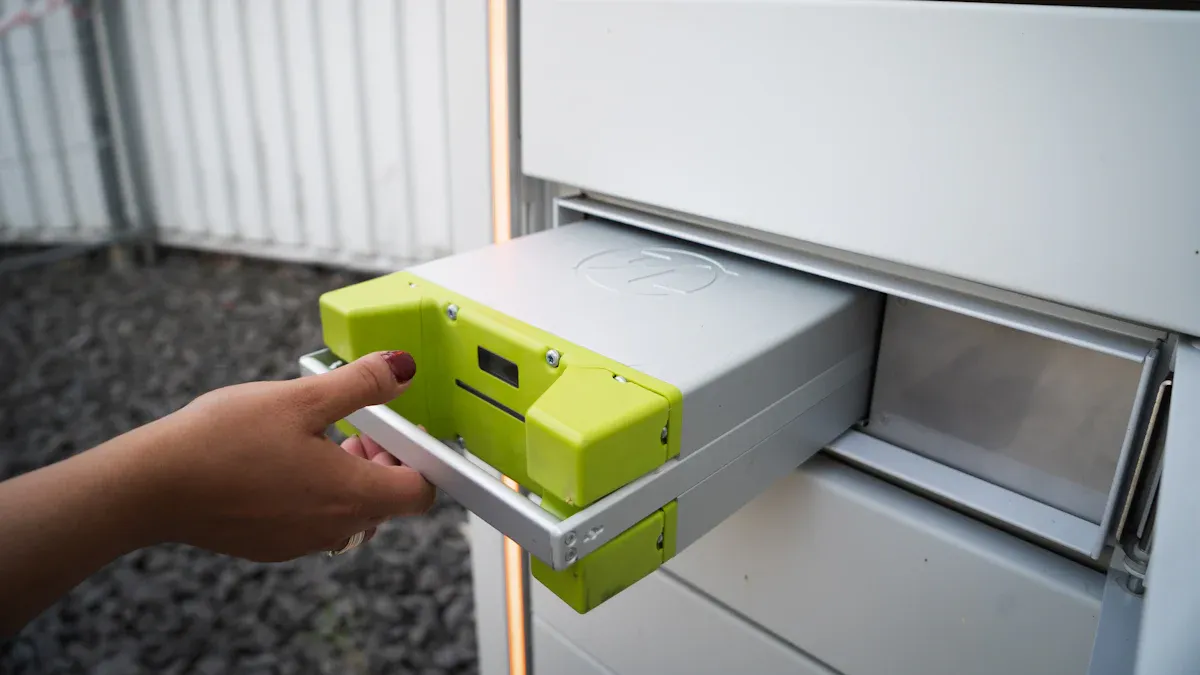
Lithium-ion batteries represent a diverse family of electrochemical storage devices. Various chemistries exist, each offering unique characteristics. Common types include Lithium Nickel Manganese Cobalt Oxide (NMC) and Lithium Iron Phosphate (LFP). NMC batteries provide high energy density, making them suitable for applications requiring extended range. LFP batteries offer excellent safety and a longer cycle life. These batteries operate by moving lithium ions between a positive electrode (cathode) and a negative electrode (anode) through an electrolyte.
Advantages
Lithium-ion technology offers significant advantages for industrial applications. They boast high energy density, allowing for compact designs and greater power output. Their long cycle life means they can endure many charge and discharge cycles, reducing replacement frequency. Lithium-ion batteries also exhibit high efficiency, minimizing energy loss during storage and retrieval. This contributes to overall system cost-effectiveness.
Disadvantages
Despite their benefits, lithium-ion batteries present certain challenges. Their initial cost remains higher compared to some older battery technologies. Safety concerns, particularly the risk of thermal runaway, require sophisticated battery management systems. The availability and ethical sourcing of raw materials like cobalt and lithium also pose environmental and supply chain considerations.
Key Industrial Applications
Lithium-ion batteries find extensive use across various industrial sectors. They power electric propulsion systems in vehicles, contributing to decarbonization efforts. These batteries are crucial for general energy storage systems, supporting grid stability and renewable energy integration. For instance, they provide high-capacity options for long-distance driving and tunnel work, demonstrating their versatility in demanding environments. Lithium-ion technology has become a cornerstone of modern industrial battery storage solutions.
Flow Batteries for Industrial Storage
Vanadium Redox Flow Batteries
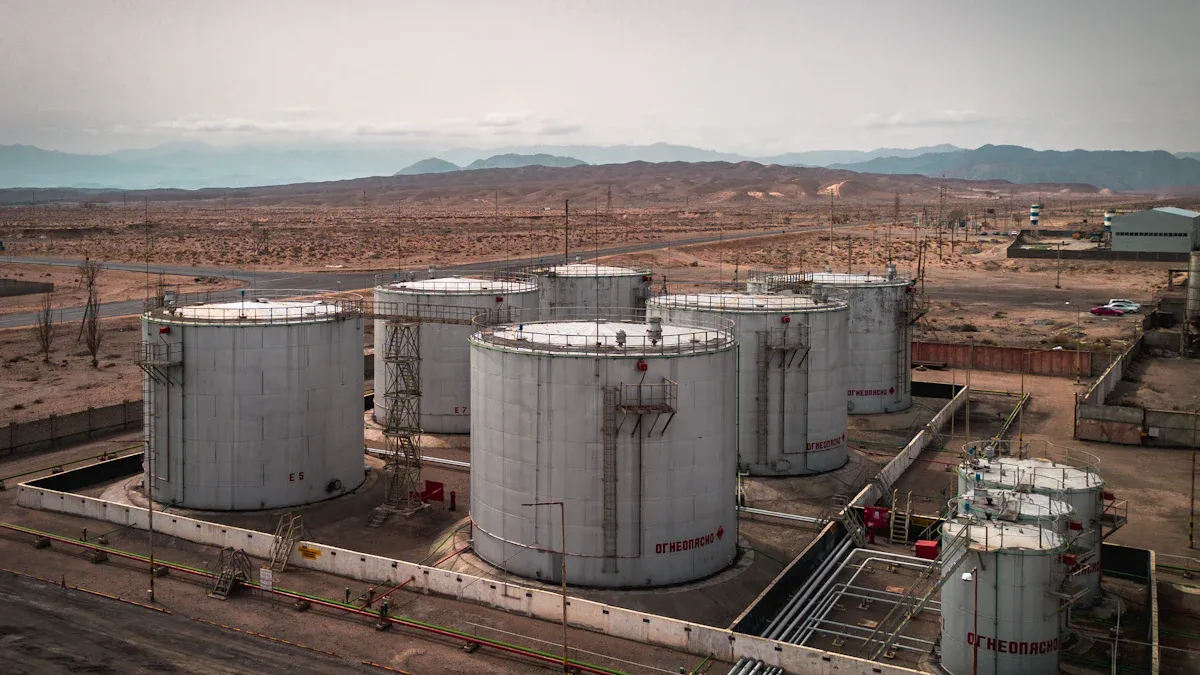
Vanadium redox flow batteries (VRFBs) represent a prominent type of flow battery technology. They store energy in liquid electrolyte solutions containing vanadium ions. These electrolytes circulate between separate tanks and an electrochemical cell. The system charges and discharges by changing the oxidation state of the vanadium ions. This design allows for independent scaling of power and energy capacity.
Other Flow Battery Chemistries
Beyond vanadium, researchers explore other flow battery chemistries. These include zinc-bromine, iron-chromium, and all-iron systems. Each chemistry offers different performance characteristics and cost profiles. Developers aim to optimize these systems for specific industrial applications.
Advantages
Flow batteries offer significant advantages for industrial battery storage. They provide long lifespans, often exceeding 20 years, and maintain capacity over many cycles. Their design allows for easy scalability; increasing energy capacity simply involves adding more electrolyte. This makes them suitable for long-duration grid storage. Flow batteries also present inherent safety benefits. The active materials are non-flammable, and the energy and power components are physically separated.
Disadvantages
Despite their benefits, flow batteries have certain drawbacks. They typically exhibit lower energy density compared to lithium-ion batteries. This means they require a larger physical footprint for a given amount of energy storage. Their initial capital cost can also be higher. The complexity of managing liquid electrolytes and pumps adds to system design and maintenance considerations.
Key Industrial Applications
Flow batteries are ideal for large-scale, long-duration energy storage. They support grid stabilization, helping balance supply and demand. Utilities use them for renewable energy integration, storing excess solar or wind power. They also provide backup power for critical infrastructure. Their ability to deliver consistent power over many hours makes them valuable for various industrial operations.
Lead-Acid Industrial Battery Storage
Types
Lead-acid batteries represent a long-standing and proven technology in energy storage. They primarily come in two main types: flooded (or wet cell) and sealed (Valve Regulated Lead-Acid, VRLA). Flooded batteries require regular maintenance, including water replenishment. VRLA batteries, which include Absorbent Glass Mat (AGM) and Gel cell variants, are sealed units. They do not require watering and offer greater flexibility in mounting. Each type serves specific operational needs.
Advantages
Lead-acid batteries offer several compelling advantages. They boast a lower initial cost compared to many newer battery technologies, making them an economical choice for various applications. Their robust design provides reliable performance, a characteristic valued in industrial settings. These batteries also perform well across a wide range of temperatures. They can deliver high surge currents, which is beneficial for applications requiring bursts of power.
Disadvantages
Despite their benefits, lead-acid batteries have notable drawbacks. They possess a lower energy density, meaning they are heavier and larger for a given energy capacity. This often requires a significant physical footprint. Their cycle life is generally shorter than lithium-ion or flow batteries, leading to more frequent replacements. Some types require regular maintenance. Environmental concerns also arise due to the lead content, necessitating proper recycling procedures.
Key Industrial Applications
Lead-acid batteries find widespread use in critical industrial applications. They commonly serve as backup power for Uninterruptible Power Supplies (UPS) in data centers and telecommunications. These batteries also power industrial vehicles, such as forklifts and automated guided vehicles. Furthermore, they provide essential energy storage for emergency lighting systems and off-grid power solutions. Their reliability makes them a dependable choice for many essential functions within industrial battery storage systems.
Sodium-Ion Industrial Battery Storage
Technology Overview
Sodium-ion batteries emerge as a promising alternative to lithium-ion technology. They utilize sodium ions as charge carriers, similar to how lithium-ion batteries use lithium. Researchers consider these batteries pivotal for low-cost, resource-constrained markets. Sodium is heavier than lithium, but it offers a potential rivalry for lithium in stationary batteries where energy density is less critical than cost. The development of sodium-ion batteries forms part of broader research into 'post-lithium-ion' battery solutions. Recent advancements highlight their growing capability:
| Feature | Advancement |
|---|---|
| Energy Density | 160 Wh/kg |
| Charging Speed | 80% charge in 15 minutes |
| Performance | Improved cold-weather performance |
| Commercialization | First-generation cell launched 2023 |
Advantages
Sodium-ion batteries offer several compelling advantages. Their primary benefit stems from the abundance and low cost of sodium, making them a more economical choice. These batteries also demonstrate robust performance characteristics.
- Sodium-air batteries, while having a lower theoretical energy capacity than lithium-air, are more stable and easier to build.
- They are still more efficient than current lithium-ion batteries.
- Tests suggest sodium-air batteries may offer a higher practical energy storage capacity compared to lithium-air.
Disadvantages
Despite their benefits, sodium-ion batteries currently present some limitations. They generally exhibit a lower energy density compared to established lithium-ion chemistries. This means they may require a larger physical footprint for equivalent energy storage. Their cycle life and overall performance are still undergoing optimization and improvement.
Key Industrial Applications
Sodium-ion batteries target specific industrial sectors. They are primarily aimed at cost-sensitive segments and stationary battery applications. In these uses, high energy density is not a critical factor. Experts believe they have the potential to rival lithium in stationary battery applications within a few years.
Sodium-Sulfur Industrial Battery Storage
Technology Overview
Sodium-sulfur (NaS) batteries represent a type of molten salt battery. They utilize liquid sodium as the negative electrode and liquid sulfur as the positive electrode. A solid ceramic electrolyte separates these two molten materials. This electrolyte allows sodium ions to pass through it during charge and discharge cycles. NaS batteries operate at high temperatures, typically ranging from 300°C to 350°C. This elevated temperature ensures both the sodium and sulfur remain in their molten states, facilitating electrochemical reactions.
Advantages
NaS batteries offer several significant advantages for large-scale energy storage. They provide high energy density, allowing for substantial energy storage within a relatively compact footprint. These batteries also boast a long cycle life, enduring many charge and discharge cycles over their operational lifespan. Their design enables long-duration energy discharge, making them suitable for applications requiring power over several hours. Furthermore, sodium and sulfur are abundant and inexpensive materials, contributing to lower raw material costs.
Disadvantages
Despite their benefits, NaS batteries present certain challenges. Their high operating temperature necessitates robust thermal management systems. This adds to the overall system complexity and capital cost. The active materials, molten sodium and sulfur, are highly reactive and corrosive. This poses safety concerns and requires stringent containment and handling procedures. The initial investment for NaS battery systems can also be substantial compared to some other technologies.
Key Industrial Applications
NaS batteries excel in large-scale, long-duration energy storage applications. Utilities deploy them for grid stabilization, effectively balancing electricity supply and demand. They are crucial for integrating intermittent renewable energy sources, such as solar and wind power, into the grid. NaS batteries also perform well in peak shaving applications. They store energy during off-peak hours and discharge it during periods of high demand. This helps reduce strain on the grid and lower electricity costs, making them a valuable component of modern industrial battery storage solutions.
Other Promising Industrial Battery Storage Technologies
Beyond established technologies, several emerging solutions show significant promise for future industrial battery storage applications.
Solid-State Batteries
Solid-state batteries represent a significant advancement in energy storage. They replace the liquid electrolyte found in traditional batteries with a solid material. This fundamental change offers several benefits. It enhances safety by eliminating flammable components. Solid-state designs also promise higher energy density, allowing for more compact and powerful units. Furthermore, they can achieve longer cycle lives. Developers are actively addressing manufacturing complexities and cost reduction to bring these batteries to widespread commercialization.
Zinc-Air Batteries
Zinc-air batteries utilize zinc as the anode and oxygen from the surrounding air as the cathode. This unique chemistry provides a high theoretical energy density. The primary materials, zinc and air, are abundant and relatively inexpensive. This makes them an attractive option for cost-sensitive applications. They also present inherent safety advantages. Current research focuses on improving their power density and extending their cycle life. These advancements will enable their broader adoption in various industrial sectors.
Thermal Energy Storage
Thermal energy storage systems capture and store heat or cold for later release. These systems employ various mediums, such as molten salts or phase change materials. They offer a highly cost-effective solution for long-duration energy storage. Thermal storage integrates seamlessly with concentrated solar power plants. It also provides efficient energy management for industrial processes requiring consistent heat. Furthermore, these systems can contribute to grid-scale energy balancing. This technology effectively supports the integration of intermittent renewable energy sources.
Choosing the Right Industrial Battery Storage Solution
Factors to Consider
Businesses must carefully evaluate several critical factors when selecting an industrial battery storage solution. The initial capital expenditure represents a primary consideration for any project. Operational costs, including ongoing maintenance and energy efficiency losses, significantly influence the long-term financial viability. The specific application dictates the required energy capacity and power output. For instance, peak shaving demands high power, while renewable energy integration requires high energy over extended periods. System lifespan and cycle life determine the battery's durability and replacement frequency. Safety protocols and environmental impact assessments are paramount for responsible deployment. Available physical space often dictates the battery's footprint. Finally, scalability for future expansion is a key requirement for many growing operations.
Matching Technology to Application
Different battery technologies suit distinct industrial applications. Lithium-ion batteries excel in scenarios demanding high energy density and compact design. These include electric vehicles, material handling equipment, or short-to-medium duration grid services. Flow batteries, with their long duration capabilities, are ideal for large-scale grid stabilization and integrating intermittent renewable energy sources. Lead-acid systems provide a cost-effective solution for backup power in Uninterruptible Power Supplies (UPS) and for powering industrial vehicles. Emerging technologies like sodium-ion and sodium-sulfur target stationary, cost-sensitive applications requiring long-duration industrial battery storage. Solid-state and zinc-air batteries offer future potential for specialized niches where enhanced safety or specific material properties are crucial.
The future of industrial battery storage is diverse and critical for modern energy systems. The optimal technology depends entirely on specific application requirements, emphasizing tailored solutions. Continuous innovation drives significant advancements in industrial battery storage, promising even more efficient and sustainable solutions for global energy needs.
FAQ
What is the main purpose of industrial battery storage?
Industrial battery storage stabilizes grids, integrates renewable energy, and improves operational efficiency. It supports a robust, sustainable energy infrastructure.
Which industrial battery technology offers the longest lifespan?
Flow batteries, especially vanadium redox types, often provide lifespans exceeding 20 years. They maintain capacity over many charge-discharge cycles.
Why are sodium-ion batteries considered a promising alternative?
Sodium-ion batteries utilize abundant, low-cost sodium. They offer an economical option for stationary applications where high energy density is less critical. 💡