
 Mobile Generator



Understanding the Working Principle of Off-Grid Solar Power Systems
Off-grid solar power systems deliver electricity independently of the main grid. These solutions capture sunlight, convert it into usable energy, and store it for later use. Over 560 million people worldwide now depend on off-grid solar as their primary electricity source, highlighting its critical role in expanding energy access.
Key Takeaways
- Off-grid solar power systems provide reliable electricity without relying on the main grid, making them ideal for remote areas and energy independence.
- Key components include solar panels, charge controllers, batteries, and inverters, each playing a vital role in capturing, storing, and delivering power efficiently.
- Proper system sizing, regular maintenance, and backup options ensure consistent performance, long lifespan, and cost savings while supporting clean energy goals.
Off-Grid Solar Power System Overview
Definition and Main Purpose
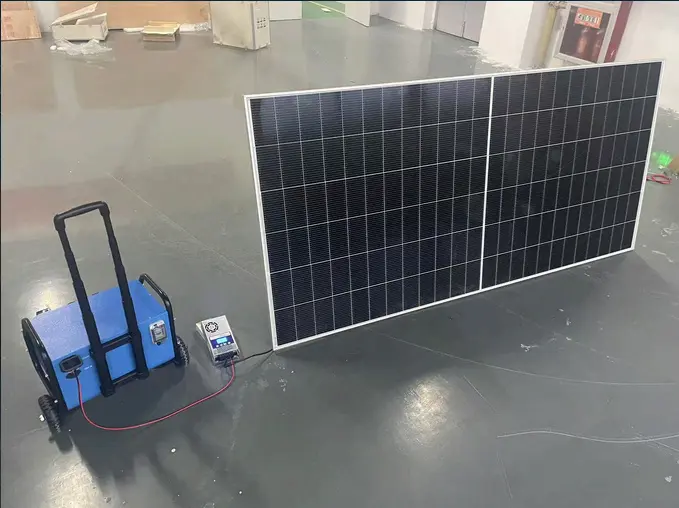
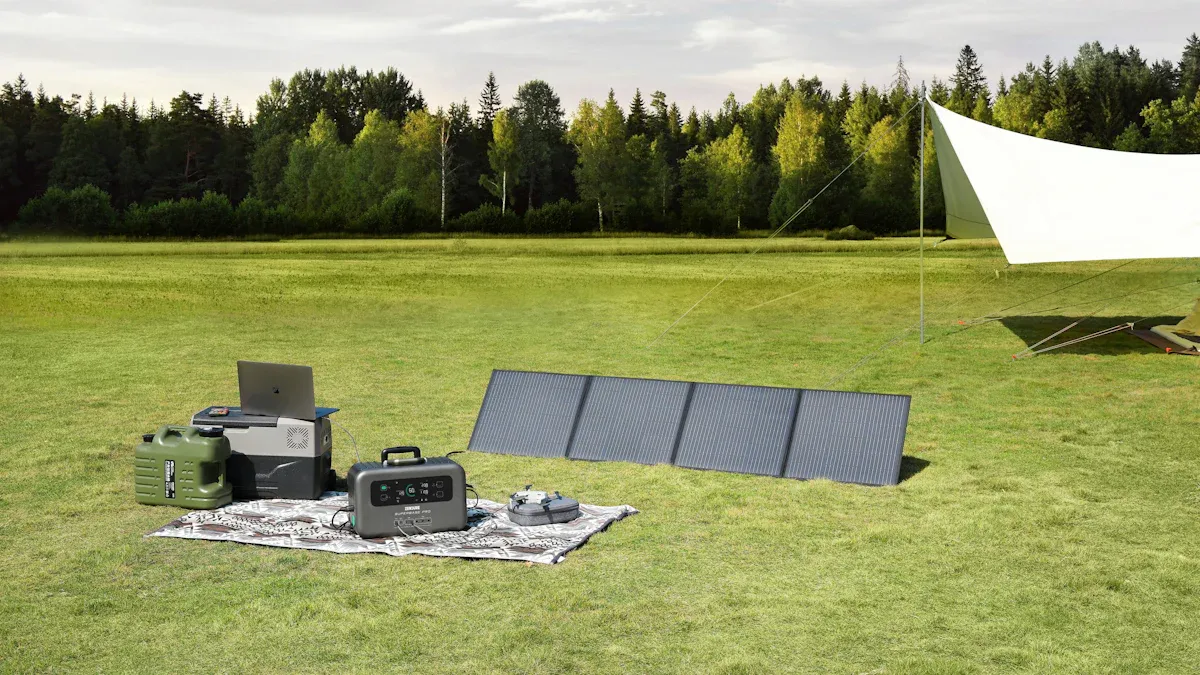
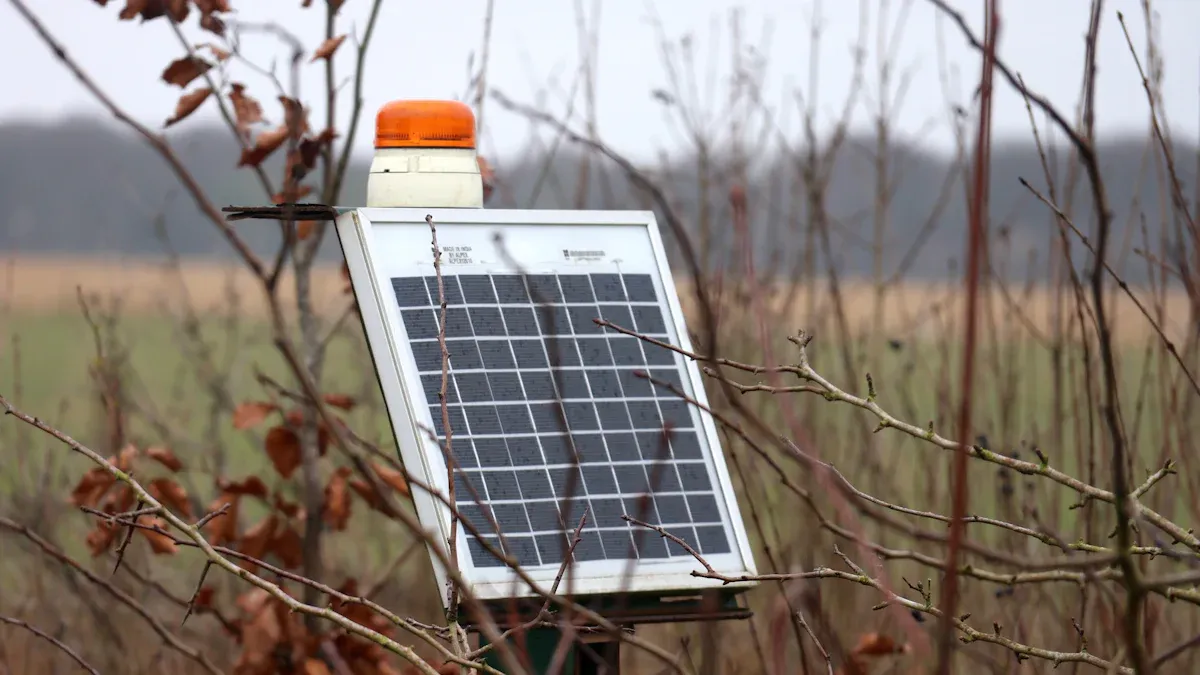
Off-grid solar power systems provide electricity without any connection to the public utility grid. These systems use a combination of solar panels, batteries, charge controllers, and inverters to generate, store, and deliver power. Their main purpose centers on achieving energy independence, especially in remote locations or areas with unreliable grid access. Users benefit from a reliable and self-sustaining power supply, even during grid outages or periods of low sunlight.
Off-grid systems support sustainability by reducing reliance on fossil fuels and lowering carbon emissions. They also eliminate monthly electricity bills after installation, offering long-term cost savings.
The following table outlines the primary components and their roles:
| Component | Role and Description |
|---|---|
| Solar Panels | Capture sunlight and convert it into DC electricity. |
| Charge Controllers | Manage energy flow to batteries, prevent overcharging, and stop reverse current at night. |
| Deep-Cycle Batteries | Store electricity for use when solar generation is not possible. |
| Inverters | Convert DC electricity from batteries into AC electricity for household use. |
Key Differences from Grid-Tied Systems
- Off-grid solar systems operate independently from the utility grid, relying solely on solar energy and battery storage.
- Grid-tied systems remain connected to the grid and switch to grid power when solar production is insufficient.
- Off-grid systems require batteries and additional equipment to store energy for use during non-sunny periods.
- Grid-tied systems can draw power from the grid as needed, ensuring continuous electricity but offering less energy independence.
- Off-grid systems suit users seeking full self-sufficiency or those living in remote areas without grid access.
Off-Grid System Components and Energy Flow
Solar Panels
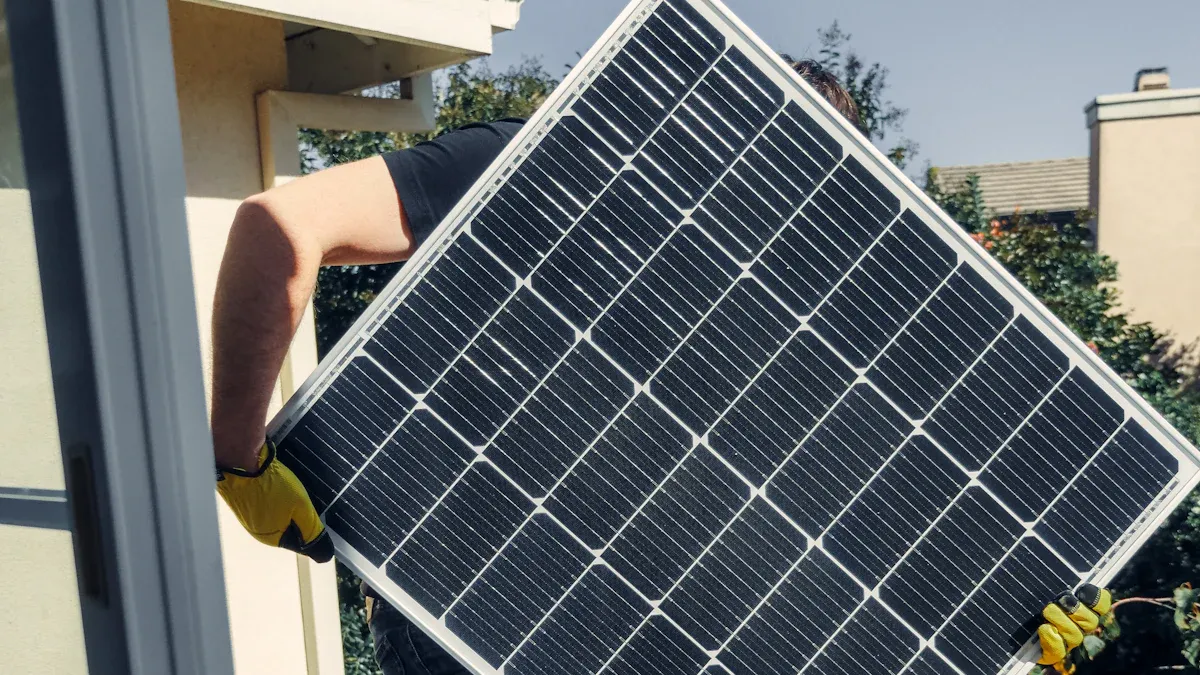
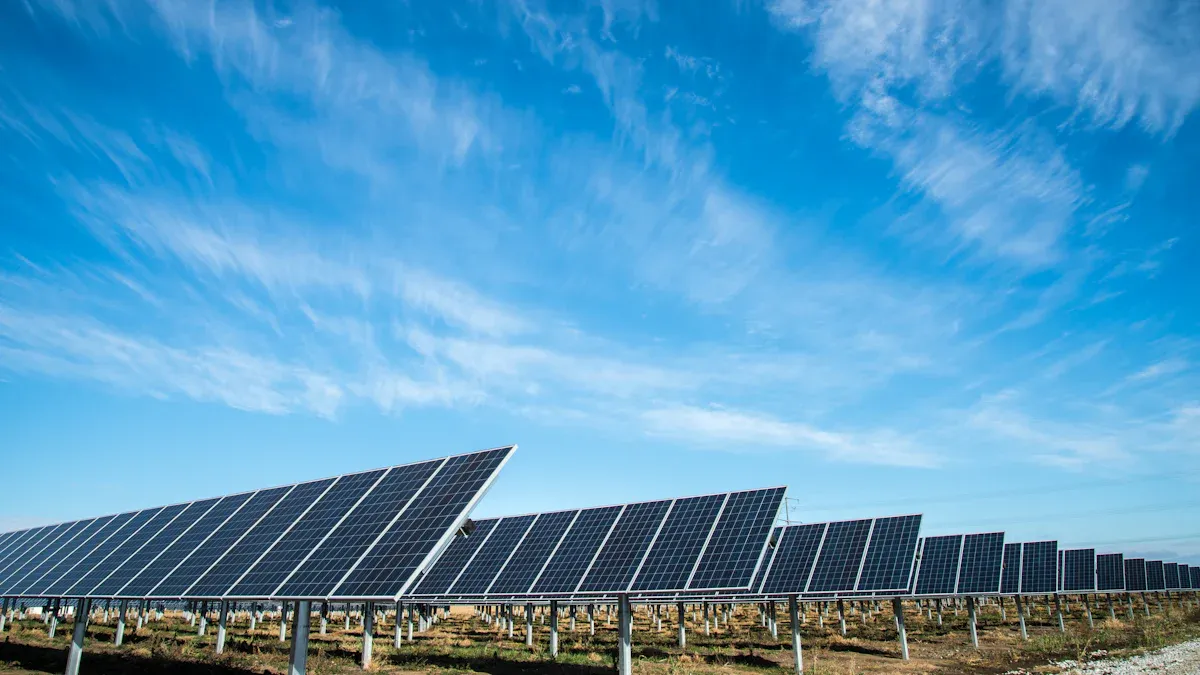
Solar panels serve as the foundation of any off-grid solar power system. They capture sunlight and convert it into direct current (DC) electricity through the photovoltaic effect. The most common types of solar panels include:
- Monocrystalline panels: High efficiency and long lifespan.
- Polycrystalline panels: More affordable, slightly less efficient.
- Thin-film panels: Lightweight and flexible, but generally less efficient.
Panel selection depends on available space, budget, and energy needs. Monocrystalline panels often suit installations with limited roof area due to their higher efficiency. Polycrystalline panels offer a cost-effective solution for larger installations. Thin-film panels provide flexibility for unique mounting situations.
Tip: Regular cleaning of solar panels helps maintain optimal energy production by reducing losses from dust and dirt.
Charge Controller
The charge controller manages the flow of electricity from the solar panels to the battery bank. Its primary role is to prevent overcharging, which can damage batteries and reduce their lifespan. The controller also blocks reverse current at night, preventing battery drain. Modern charge controllers offer additional features such as temperature compensation, overvoltage protection, and short-circuit safeguards.
There are two main types of charge controllers:
- PWM (Pulse Width Modulation): Simple, affordable, and suitable for small systems. Requires voltage matching between panels and batteries.
- MPPT (Maximum Power Point Tracking): More efficient, especially in variable sunlight or cold conditions. Ideal for larger or more complex systems.
A well-chosen charge controller ensures efficient and safe battery charging, extending the overall system lifespan.
Battery Bank
The battery bank stores excess electricity generated during the day for use at night or during cloudy periods. Battery selection impacts system reliability, maintenance requirements, and total cost of ownership. The table below compares common battery types used in off-grid solar power systems:
| Battery Type | Energy Density (Wh/kg) | Max Depth of Discharge (%) | Cycle Life (Number of Cycles) | Maintenance | Key Advantages | Key Limitations |
|---|---|---|---|---|---|---|
| Flooded Lead-Acid (FLA) | 30 – 40 | 50 | 1000 – 1500 | Requires regular maintenance (water level, ventilation) | Low upfront cost, reliable, robust surge current | Heavy, lower energy density, shorter lifespan, maintenance intensive |
| Valve-Regulated Lead-Acid (VRLA) AGM & Gel | 30 – 40 (AGM), 35 – 40 (Gel) | 80 | 700 – 1500 | Low maintenance (sealed) | Spill-proof (AGM), better self-discharge rates, resistant to vibration (Gel) | Sensitive to improper charging (Gel), moderate lifespan |
| Lead Carbon | 35 – 45 | 80 | 1500 – 2000 | Similar to lead-acid but improved | Longer cycle life, better charge acceptance, stable under partial charge, better high-temp performance | Heavier, lower energy density than lithium types |
| Lithium-Ion | 100 – 230 | 80 | 1000 – 2000 | Minimal maintenance | High energy density, longer lifespan, efficient recharge, good temperature tolerance | Higher upfront cost, requires compatible system components |
| Lithium Iron Phosphate (LiFePO4) | 90 – 180 | 80 | 3000 – 6000 | Minimal maintenance | High safety, thermal stability, very long cycle life, eco-friendly | Higher initial cost, but cost-effective over lifespan |
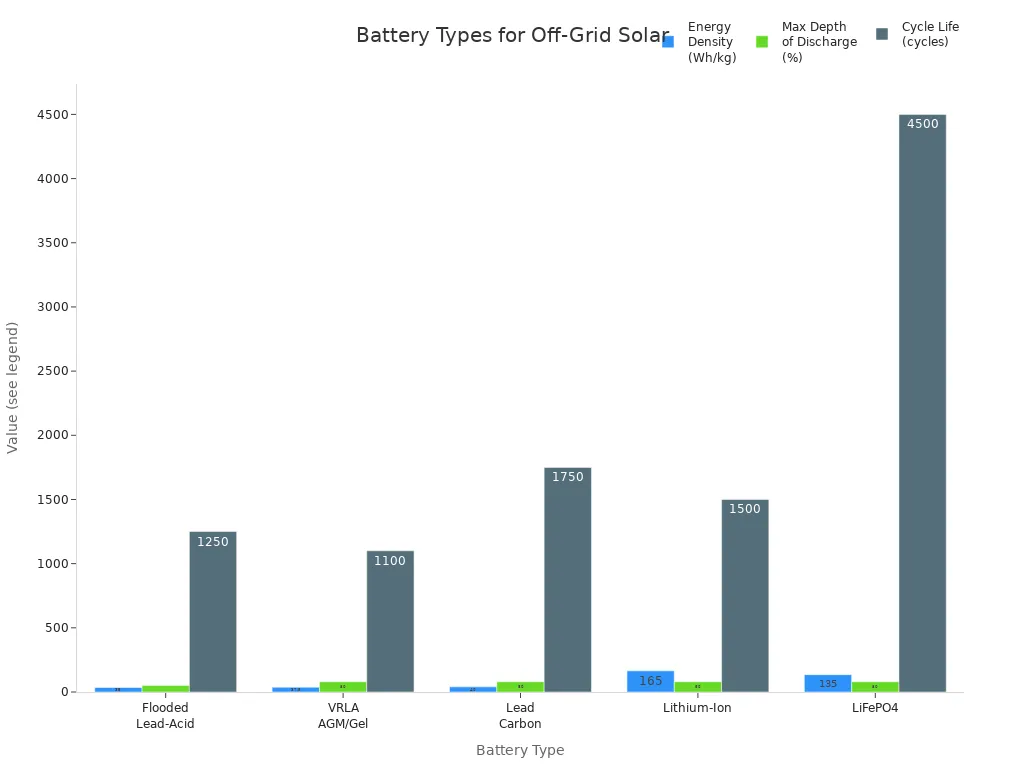
Lithium Iron Phosphate (LiFePO4) batteries stand out for their long lifespan and safety. Flooded lead-acid batteries remain popular for their low cost but require regular maintenance. Battery lifespan varies by chemistry, with LiFePO4 batteries lasting 8–15 years and lead-acid types typically lasting 3–5 years.
Inverter
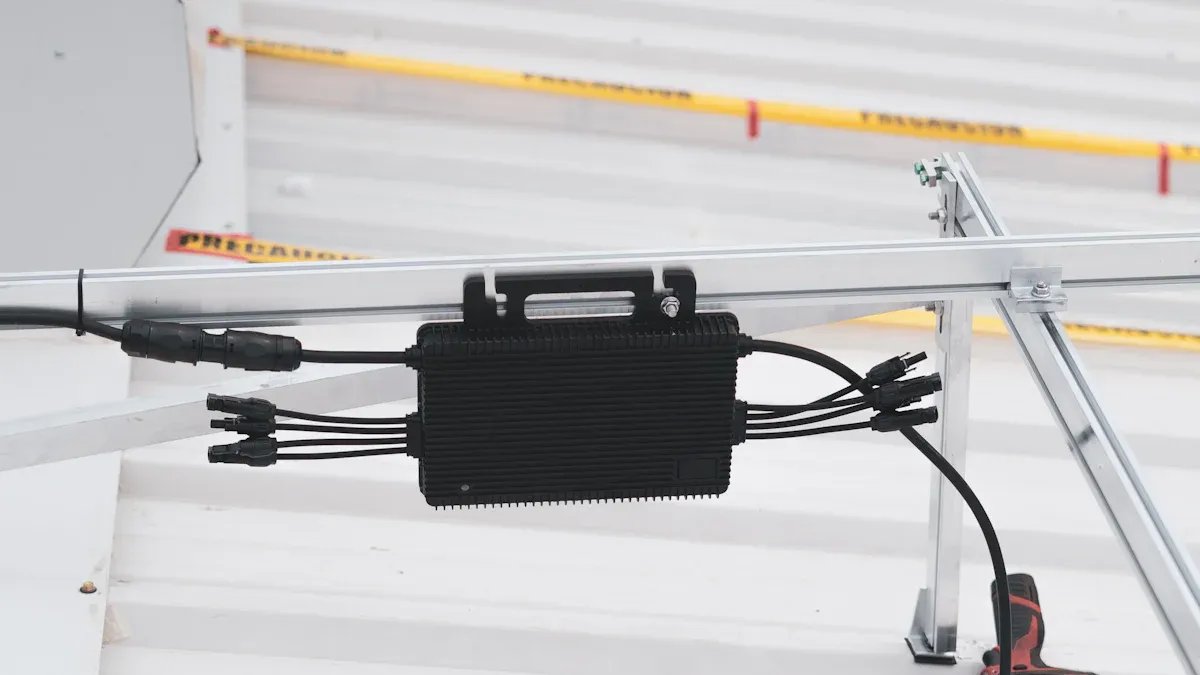
The inverter converts stored DC electricity from the battery bank into alternating current (AC) electricity, which powers household appliances. This conversion process involves rapidly switching the DC current to create an AC waveform that mimics utility power. The inverter must match the battery voltage and the total load requirements to ensure reliable operation.
Common inverter types include:
- Pure Sine Wave Inverters: Produce clean AC power suitable for sensitive electronics.
- Modified sine wave inverters: Less expensive, but may not work well with all devices.
- Hybrid inverters: Combine inverter and charger functions for greater flexibility.
Efficiency plays a crucial role in inverter selection. Most modern inverters used in off-grid systems achieve at least 95% efficiency, with premium models exceeding 97%. The table below summarizes typical efficiency ratings:
| Efficiency Rating (%) | Performance Level |
|---|---|
| < 93 | Low (outdated or inefficient) |
| 93 – 95 | Average |
| 95 – 97 | Good |
| > 97 | Excellent (high-end models) |
Note: Selecting a high-efficiency inverter reduces energy loss during conversion and maximizes usable power.
Step-by-Step Energy Flow
The energy flow in an off-grid solar power system follows a clear sequence:
- Solar panels collect sunlight and convert it into DC electricity.
- The charge controller regulates the flow of DC electricity, ensuring safe and efficient battery charging.
- The battery bank stores DC electricity for use when sunlight is unavailable.
- The inverter converts stored DC electricity into AC electricity for household appliances.
- Additional components such as disconnect switches, fuses, breakers, and monitoring systems enhance safety and reliability.
Potential energy losses can occur at each stage. Shading, dust, and panel mismatch reduce solar panel output. Cable losses and inverter inefficiencies further decrease available energy. Regular maintenance and careful system design help minimize these losses and ensure consistent performance.
Pro Tip: Oversizing solar panels and battery storage by 20–30% can help accommodate unexpected demand and reduce the risk of power shortages in off-grid systems.
Off-Grid System Design and Practical Considerations
System Sizing and Load Management
Proper system sizing ensures reliable power in an off-grid setup. The process begins with a detailed load evaluation, where users calculate the total daily energy consumption by listing all appliances and their operating hours. Next, they estimate the number of days the system must operate without sunlight, known as days of autonomy, and factor in the lowest expected temperatures to size the battery bank accurately. Solar array size is determined by dividing daily energy needs by average peak sun hours, then adjusting for inefficiencies with a safety margin of 10–25%. Battery banks are sized by multiplying daily usage by days of autonomy and dividing by the battery’s depth of discharge. Inverter and charge controller selection must match peak and surge loads, with a buffer for future expansion.
Tip: Oversizing components and planning for future growth helps maintain system performance and reliability.
Effective load management strategies include categorizing loads into essential, flexible, and non-critical tiers. Automated controls, such as load-shedding relays and smart inverters, enforce power priorities and prevent overloads. Real-time monitoring tools and user training further optimize energy use and reduce accidental overloads.
Backup Power Options
Backup power remains essential for off-grid solar systems, especially during prolonged cloudy weather or high demand. Most systems combine battery banks with backup generators. Generators can run on gasoline, diesel, or dual fuels, offering flexibility and reliability. Automatic or manual transfer switches connect generators to the system, ensuring seamless transitions during outages. Smart controllers monitor battery charge and start the generator when needed, powering both the home and recharging batteries. This integration ensures continuous power supply and reduces the risk of service interruptions.
Installation, Maintenance, and Safety
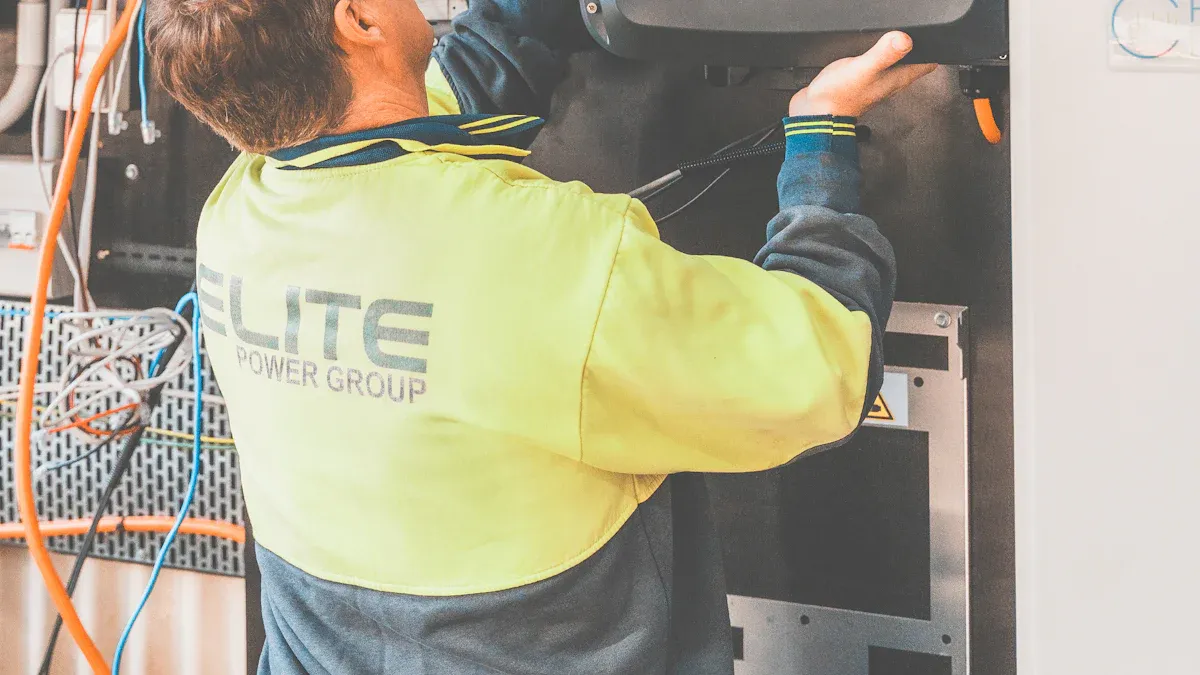
Successful installation of off-grid solar systems requires careful planning and adherence to safety standards. Installers must obtain building, electrical, and zoning permits to comply with local regulations. Key steps include conducting a load analysis, selecting appropriate batteries, installing charge controllers and inverters, and mounting solar panels for maximum sun exposure. Safety measures involve using rated cables, proper grounding, surge protection, and accessible emergency shut-off switches.
Routine maintenance extends system life. Users should clean solar panels biannually, inspect batteries for corrosion and fluid levels, and monitor inverter and charge controller performance. Professional inspections and adherence to the National Electrical Code (NEC) ensure ongoing safety. Fire safety, weatherproofing, and user education further protect the system and its users.
Off-grid solar power systems generate, store, and supply electricity independently, providing reliable energy in remote locations. Users benefit from reduced energy costs, minimal maintenance, and enhanced resilience against outages. These systems support sustainability by lowering carbon emissions and promoting clean energy. Individuals seeking energy independence should consider off-grid solutions.
FAQ
How long do off-grid solar batteries usually last?
Most lithium iron phosphate batteries last 8–15 years. Lead-acid batteries typically last 3–5 years. Battery lifespan depends on usage, maintenance, and environmental conditions.
Can off-grid solar systems power all household appliances?
Off-grid systems can power most appliances. Users must size the system correctly and prioritize essential loads. High-demand devices may require larger inverters and battery banks.
What maintenance does an off-grid solar system require?
Users should clean panels, check battery health, and inspect wiring regularly. Professional inspections help ensure safety and system longevity.