2026 How to Choose the Best Battery Power Generator?
When selecting the right Battery Power Generator, the options can feel overwhelming. Expert John Miller, a consultant in renewable energy solutions, emphasizes, "Not all generators fit every need." This highlights the importance of understanding your specific requirements.
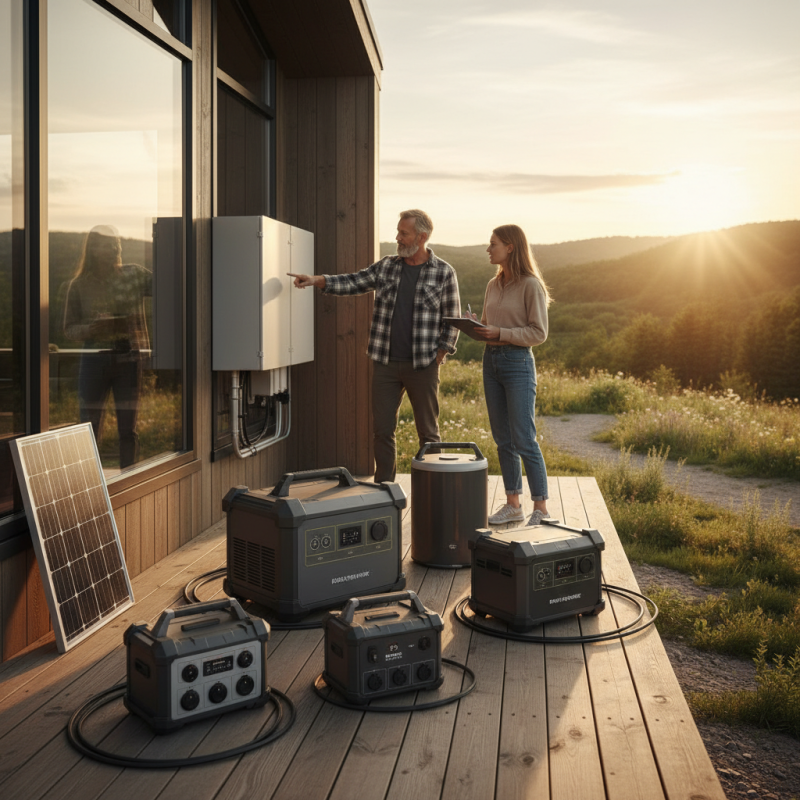
Battery Power Generators vary widely in their features and capabilities. For example, some are designed for short outdoor trips, while others are suitable for home backup. Knowing where and how you will use it helps narrow down choices.
Make sure to evaluate the generator's capacity. Different battery types provide differing power outputs and charging times. As you delve into this decision, remember that the most expensive option isn't always the best. Reflecting on your lifestyle and power needs will guide you toward a reliable solution.
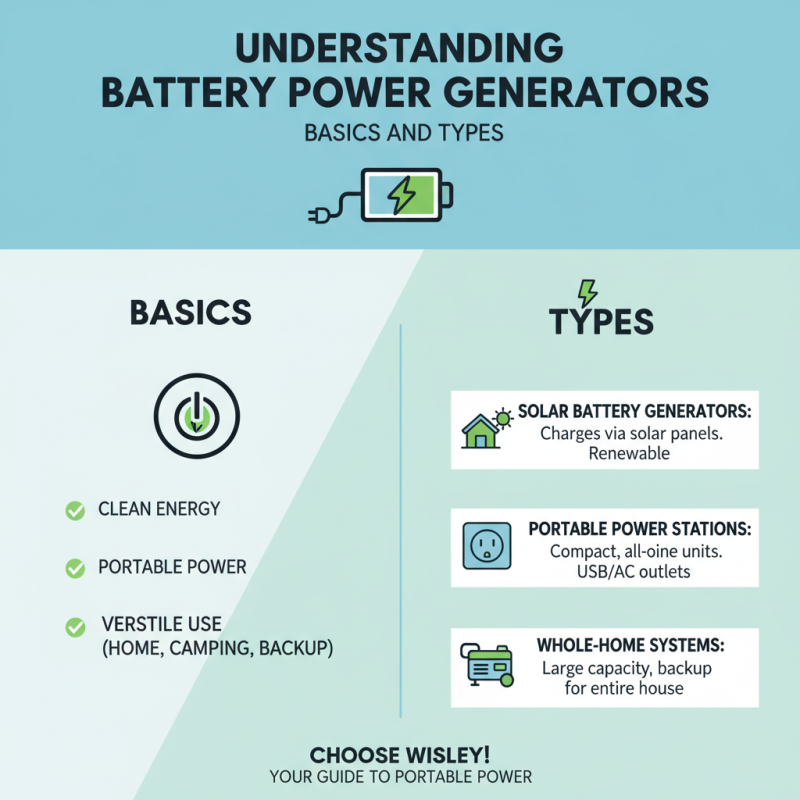
Understanding Battery Power Generators: Basics and Types
Battery power generators are becoming increasingly popular. They provide a clean and portable energy source for various needs. Understanding their basic types is essential for making informed choices.
There are several types of battery power generators. Portable generators are great for camping or outdoor use. They are lightweight and easy to transport. They typically offer lower power output but sufficient energy for small devices. On the other hand, solar battery generators harness sunlight for charging. This makes them environmentally friendly but may limit usage in poor weather.
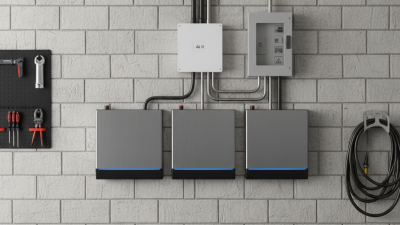
In contrast, stationary battery systems offer more power. They are suitable for homes, providing backup during outages. However, they require a more significant investment. Each type has its pros and cons. Buyers should think about their specific energy needs. Consider factors like capacity, charging speed, and portability. Reflecting on these elements can lead to better choices in battery power solutions.
Key Factors to Consider When Choosing a Battery Power Generator
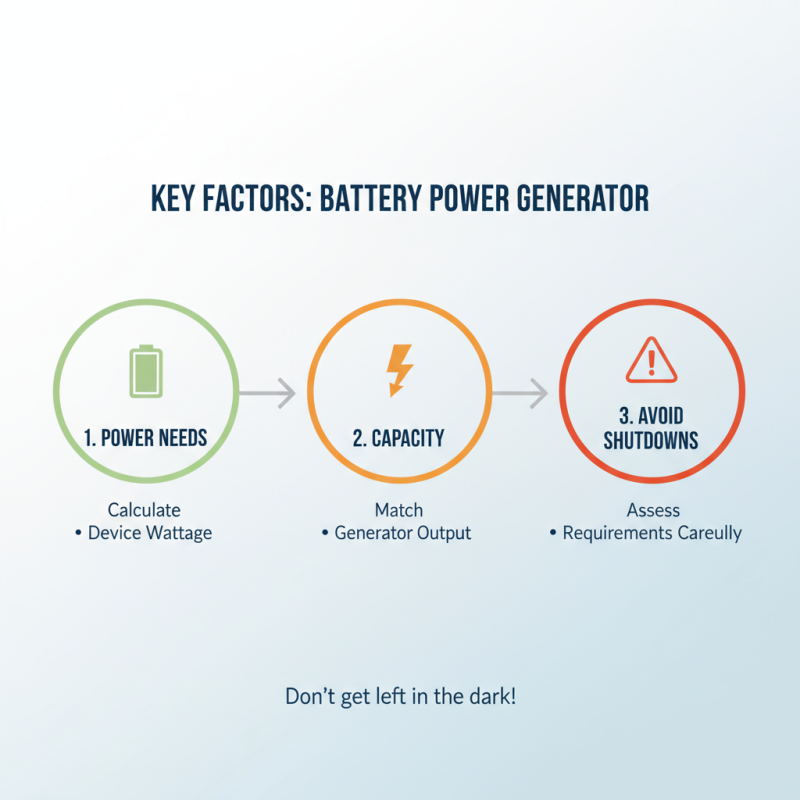
When selecting a battery power generator, consider your power needs first. How much energy will you require? Calculate the wattage of devices you plan to use. This helps in understanding the generator’s capacity. A generator with insufficient capacity can lead to unexpected shutdowns. It’s essential to assess your power requirements carefully.
Next, evaluate the generator's portability and weight. Will you move it often or keep it stationary? If mobility is key, choose a lightweight model. Battery life is also crucial. Different generators offer various runtime lengths. You’ll want a generator that lasts through your most demanding power needs. Always check the recharge time as well—some take longer than others.
Look into safety features and warranties. These can provide peace of mind. A generator without proper safety mechanisms can be a risk. Sometimes, the most affordable option lacks these critical features. Consider reading reviews to gauge reliability. Personal experiences shared by users can highlight potential issues. As you reflect on your choices, remember that the best generator fits your lifestyle and needs.
Evaluating Battery Capacity and Runtime for Your Needs
When evaluating battery capacity, it's vital to match your needs with the right specifications. Battery capacity is often measured in amp-hours (Ah) or watt-hours (Wh). For example, a generator with a capacity of 100Ah can power a 12V device drawing 10A for about 10 hours. Knowing your devices’ power requirements in watts helps determine necessary capacity. Industry reports suggest a 20% buffer beyond your needs to avoid unexpected drain.
Runtime depends on the battery's efficiency and the load placed on it. If the generator consistently powers devices at maximum capacity, the runtime decreases sharply. According to the Portable Power Association, actual runtime can depreciate as load increases, sometimes by up to 30%. Regular reviews of your power demands can prevent frustration. Take the time to calculate total wattage and compare it against different models.
Also, consider the depth of discharge. Many batteries optimize their lifespan at around 50% discharge. This means a generator rated for 200Ah effectively provides 100Ah for longevity. Studies show that overspending on capacity is common, leading to underutilized resources. Balancing these details ensures that your investment remains effective and efficient for years to come.
Assessing Portability and Design Features in Battery Generators
When choosing a battery power generator, portability and design features are key considerations. A lightweight generator allows for easy transport. Look for units that are compact and include handles or wheels. This makes them ideal for camping trips or emergency use. Stability is crucial, so check the design for a sturdy base.
In terms of design, consider the control panel layout. It should be intuitive and easy to access. A well-placed display for battery level and output can be very helpful. Some generators have built-in safety features, like automatic shut-off. These features can protect your device from overheating or overloading.
Tips: Always check the weight before purchasing. Is it manageable for your needs? Reflect on your usage scenario. What situations require portability? Evaluate your space for storage as well. Ensure there's room to keep the generator safely. The right design can enhance both usability and efficiency.
Comparing Brands and Pricing: Finding the Best Value Option
When looking for a battery power generator, comparing brands is crucial. Each brand offers distinct features and performance levels. It's essential to assess what you need—whether it's portability, power output, or battery capacity. Features can vary significantly, often influencing overall pricing as well. A higher price tag doesn’t always guarantee better quality.
Understanding market prices can help you find the best value. Prices can range widely, so doing some research is beneficial. Check reviews and customer feedback to gauge reliability. Sometimes, less expensive options offer almost the same benefits as pricier alternatives. Don’t overlook warranty options either; a solid warranty reflects a brand’s confidence in its product.
Despite thorough research, choices may still feel daunting. The perfect generator might not exist for everyone. A model that suits one person may not work for another. Reflecting on your specific needs and usage scenarios will guide your decision. Personal priorities shift, so revisit your choice if necessary. The landscape of battery power generators evolves quickly, and staying informed is key.
2026 Battery Power Generators Comparison

 Mobile Generator