2026 How to Choose the Best Battery Power Generator?
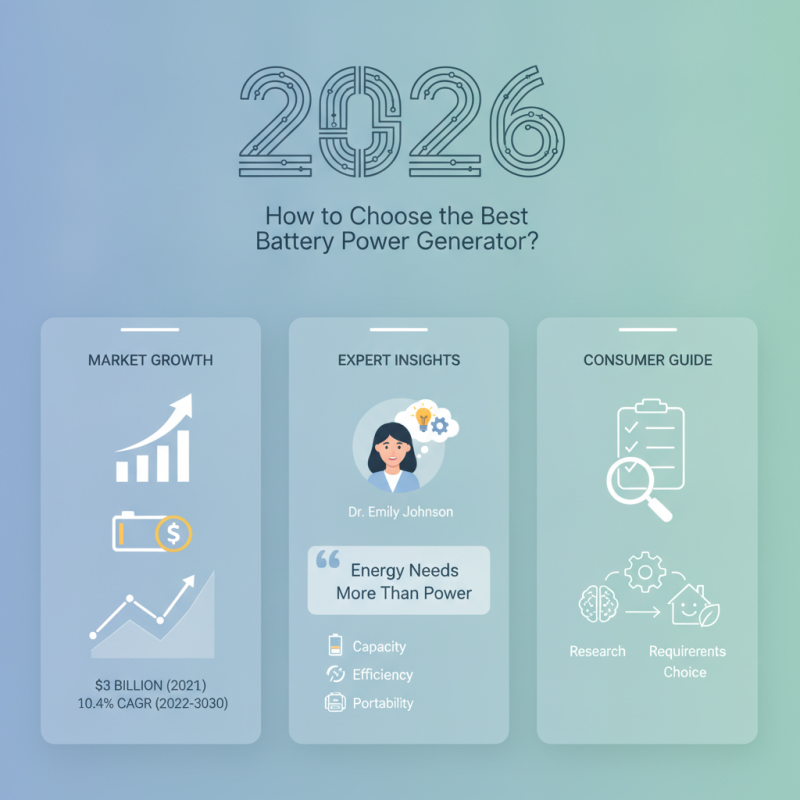
In today's world, the demand for reliable energy sources is increasing. The Battery Power Generator market is experiencing significant growth. According to a report by Grand View Research, the global battery generator market size was valued at approximately $3 billion in 2021 and is projected to expand at a CAGR of 10.4% from 2022 to 2030. This trend highlights the growing reliance on portable and renewable energy solutions.
Experts emphasize the importance of selecting the right Battery Power Generator. Dr. Emily Johnson, a recognized authority in energy systems, states, “Choosing a battery generator is not just about power; it’s about understanding your energy needs.” Her insights underline the complexity of making an informed choice. Various factors, such as capacity, efficiency, and portability, play crucial roles. The industry has seen a surge in advanced technologies, yet consumers often struggle with technical specifications.
As you navigate this evolving landscape, it’s vital to consider both personal requirements and expert recommendations. With numerous options available, a faultless decision may elude you. A deep dive into product reviews and specifications can feel overwhelming. However, the right research can lead to a well-informed choice that meets your energy needs effectively.
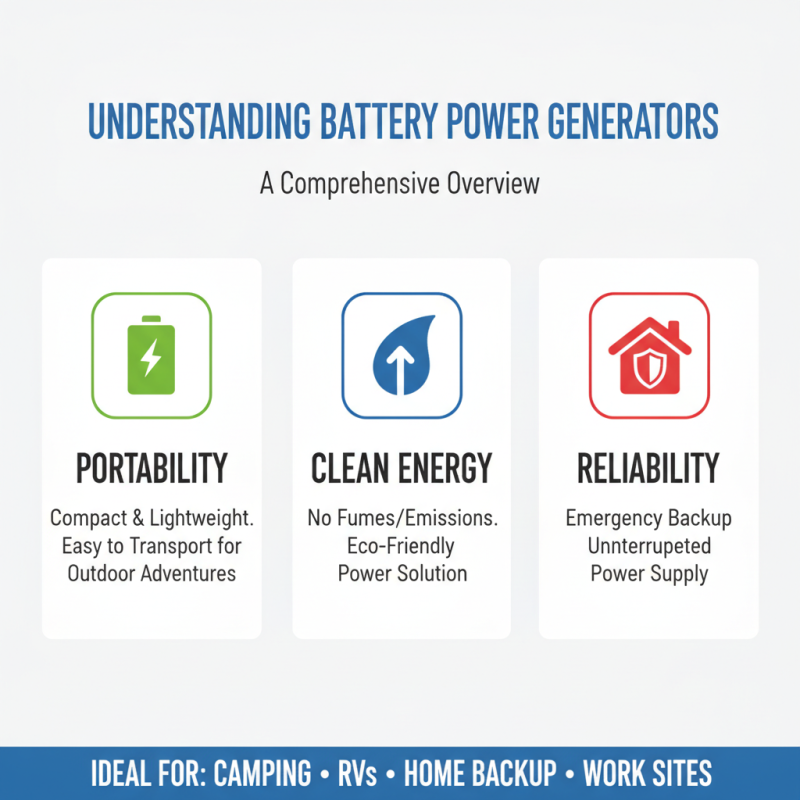
Understanding Battery Power Generators: A Comprehensive Overview
Battery power generators are becoming essential for various needs. They offer portability and clean energy options for outdoor activities or emergency situations. Understanding how these generators work can greatly enhance your selection process.
At their core, battery power generators store energy in rechargeable batteries. This energy can power tools, devices, or even appliances. The different types available range from small, lightweight models to larger systems capable of powering an entire home. Always consider the wattage needs of your equipment. Overloading your generator can lead to failures and costly repairs.
Moreover, charging options are crucial. Some models can charge through solar panels or traditional outlets. Factors like charge time and battery lifespan also affect performance. Users must reflect on their power needs over time. Will you rely heavily on this generator or use it sparingly? A thoughtful approach is essential for making the right investment.
Key Features to Consider When Choosing a Battery Power Generator
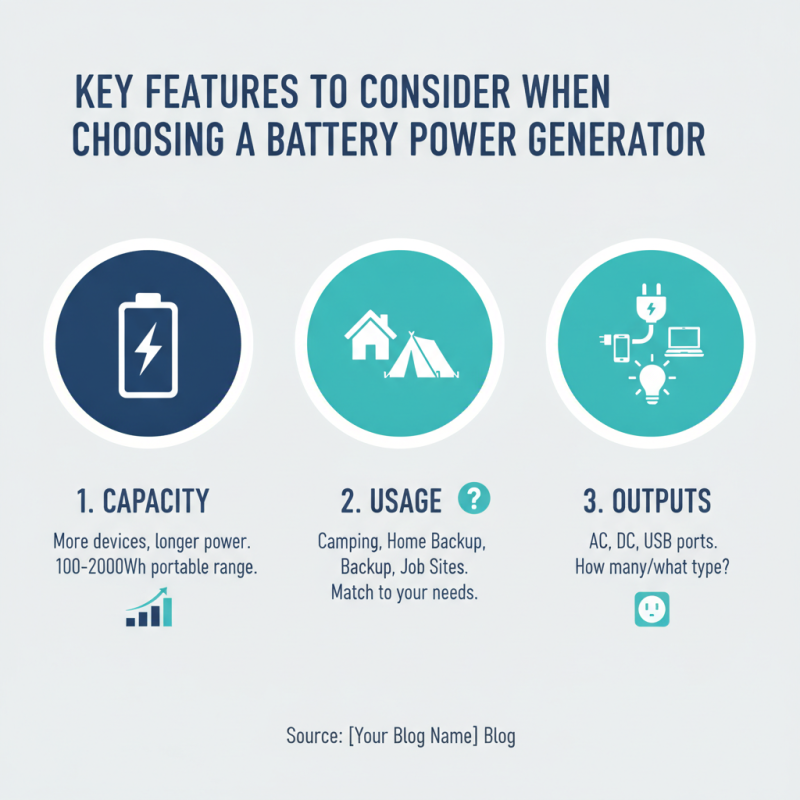
When selecting a battery power generator, several key features deserve attention. First, consider the capacity. A generator with a higher capacity can power more devices for longer periods. Many portable models range from 100 to 2000 watt-hours. Think about your needs. Will you use it for camping, emergency home backup, or job sites? Knowing your usage will guide your choice.
Next, examine the weight and portability. Heavier generators may provide more power, but they can be cumbersome. A lightweight generator can fit easily in your car or backpack. Look for models with handles or wheels. These features enhance usability.
Finally, check the charging options. Some generators can be charged through solar panels, wall outlets, or car ports. Versatile charging options offer flexibility. Ensure the model has a reliable battery life indicator. This prevents unexpected shutdowns. Personal experiences with battery longevity vary. Users often find that advertised times differ from real-life scenarios. It's essential to read reviews carefully.
Evaluating Capacity and Output Requirements for Your Needs
When selecting a battery power generator, assessing capacity and output requirements is crucial. According to industry reports, approximately 70% of users underestimate their power needs. This can lead to inadequate performance during outages. For instance, a typical household requires between 3,000 to 7,500 watts during emergencies. Understanding these needs can prevent situations where your generator fails to power essential devices.
Consider the devices you want to run. A refrigerator alone often requires 1,000 to 2,000 watts. Adding lights and a heater may increase total demand significantly. Moreover, the starting wattage can be much higher than the running wattage. This is a common oversight. Users may buy a generator based on running wattage without accounting for startup requirements.
To ensure reliability, prioritize generators with a slightly higher capacity than your maximum needs. Experts recommend selecting a generator that can handle at least 20% more than your calculated total wattage. This buffer can account for unexpected power surges. In this process, it’s important to understand your specific situation. Every home and usage scenario differs, and there is no one-size-fits-all solution. Collecting data and reassessing power needs regularly is essential for an optimal choice.
Assessing Portability and Design for Ease of Use
When selecting a battery power generator, portability is a crucial factor. A portable generator should be lightweight yet robust enough for various applications. A recent industry report indicates that over 70% of users prefer generators weighing less than 50 pounds for ease of handling. This highlights the significance of weight in consumer choice.
Design also plays a pivotal role in usability. Features like built-in handles and compact shapes improve maneuverability. Additionally, many modern generators now include wheels, enhancing transportability. A report from a leading energy journal states that 60% of consumers consider design when making their purchase.
Despite these advancements, some designs can be clunky or awkward. Users often find that even lightweight options can have poor balance, making them difficult to lift. It is essential to critically examine how a generator feels in real-world use. Try lifting and moving the unit before deciding. Achieving a balance between weight, design, and functionality is key for long-term satisfaction.
Battery Power Generator Portability and Design Assessment
Comparing Price and Value: Finding the Best Fit for Your Budget
When selecting the best battery power generator, price and value play a crucial role. You'll want to assess what features you truly need. A low price may seem attractive, but you might miss important specifications. Ensure the generator meets your power requirements for essential devices. Look for wattage ratings, run time, and portability features that fit your lifestyle.
Consider this: the cheapest option may not offer the best longevity or efficiency. Often, budget brands cut corners in build quality. Read user reviews and expert opinions to gauge reliability. This information can reveal which models last longer under regular usage. Invest time in research; it pays off in the long run.
Tips: Calculate your energy needs before shopping. This helps narrow down your options. Also, check warranty options. A good warranty indicates a manufacturer’s confidence in their product. Comparing features side by side can also help visualize the value you get for your money. Don't rush; take the time to find your ideal generator. Your choice should not only fit your budget but also serve you reliably.

 Mobile Generator