Top 10 Energy Backup Devices for Home and Office Use?
In today’s world, the reliability of power supply is essential for both homes and offices. According to a recent study by the EIA, around 3 million customers experience power outages annually in the U.S. alone. This unpredictability highlights the need for effective solutions—a key one being the Energy Backup Device. These devices serve as a critical line of defense against unforeseen disruptions, ensuring that essential appliances and operations remain uninterrupted.
As the demand for continuous power grows, the market for backup systems is expanding. A report by MarketsandMarkets estimates that the global energy backup system market will reach $26.2 billion by 2025. This surge reflects a shift toward preparedness and resilience in the face of natural disasters and infrastructure failures. However, many consumers remain uninformed about their options, often leading to reactive rather than proactive choices.
Consumers must reflect on their energy needs. Not all energy backup devices are created equal, and choosing the right one requires careful consideration. The balance between cost, capacity, and longevity is crucial. Inadequate research might result in poor choices that lead to inconveniences during power outages. Therefore, understanding what devices are available is vital for ensuring readiness and peace of mind.
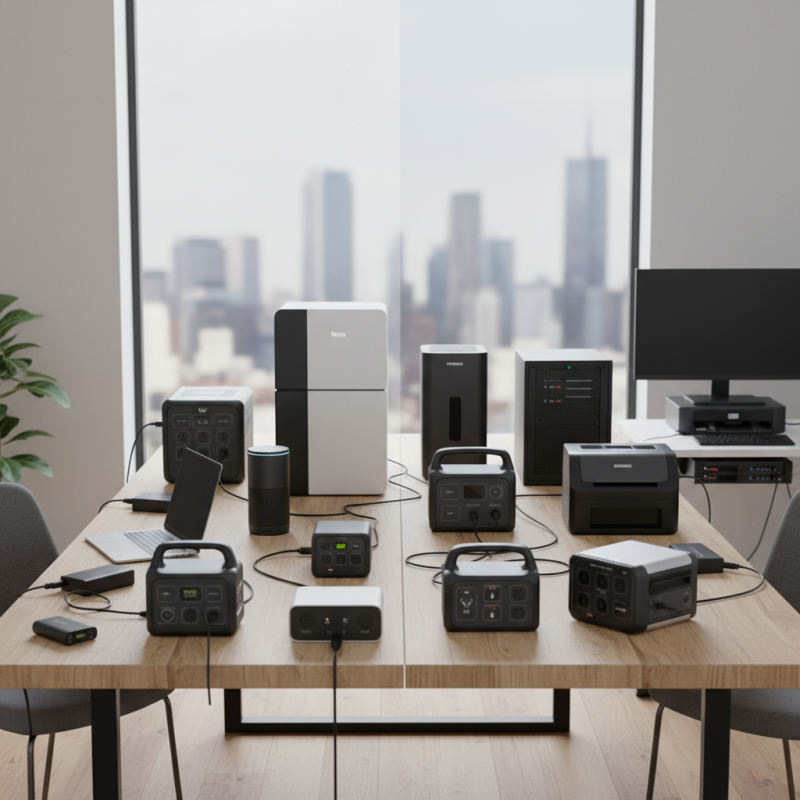
Top 10 Energy Backup Devices for Home and Office Use
Power outages can disrupt daily life. It’s crucial to have reliable energy backup devices. These devices ensure your home and office stay powered during emergencies.
When choosing a backup device, consider your power needs. Calculate the wattage of essential appliances. This helps in selecting an appropriate system. Some may find their choices overwhelming. There are many options available. Take your time to research each device’s features.
Tips: Small battery banks are portable. They charge phones and laptops efficiently. Larger systems can power refrigerators and lights. Assess your space before making a choice.
Investing in solar generators could be thoughtful, too. They harness sun energy. However, their effectiveness depends on your local climate. Ensure your storage capacity meets your requirements. Don't overlook the importance of maintenance. Regularly check for battery health and system functionality.
Understanding Energy Backup Needs: Statistics and Trends in Power Outages
Power outages are becoming more common. Statistics show that many households experience outages yearly. The demand for reliable energy backup systems is increasing. Understanding your energy needs is crucial. Assess the amount of power you typically use during an outage. This will help you choose the right device.
Consider your daily routines. What devices do you rely on most? A backup battery can keep essential appliances running. A generator might support larger systems but could be noisy. Think about your space. Some devices require more room than others. Make sure your choice fits your lifestyle and home.
Here are some tips:
- Keep an eye on your local utility reports.
- Monitor weather patterns for potential outages.
- Test your backup systems regularly.
Regular checks help avoid surprises when the lights go out. Remember, a little preparation can go a long way. The right device will provide peace of mind and security.
Top 10 Energy Backup Devices for Home and Office Use
| Device Type |
Battery Capacity (Wh) |
Runtime (hours) |
Weight (lbs) |
Average Price ($) |
| Portable Power Station |
500 |
5-10 |
20 |
300 |
| Uninterruptible Power Supply (UPS) |
1500 |
3-6 |
30 |
250 |
| Solar Generator |
1000 |
8-12 |
40 |
700 |
| Gasoline Generator |
3000 |
10-20 |
80 |
600 |
| Home Battery Storage |
7000 |
24+ |
300 |
8000 |
| Hybrid Inverter |
5000 |
12+ |
200 |
1500 |
| Energy Storage System |
10000 |
24+ |
500 |
12000 |
| Rechargeable Battery Pack |
200 |
2-4 |
5 |
50 |
| Wind Turbine |
5000 |
Varies |
400 |
1500 |
| Battery Backup for HVAC |
8000 |
6-12 |
350 |
2500 |
Comparative Analysis: Types of Energy Backup Devices Available Today
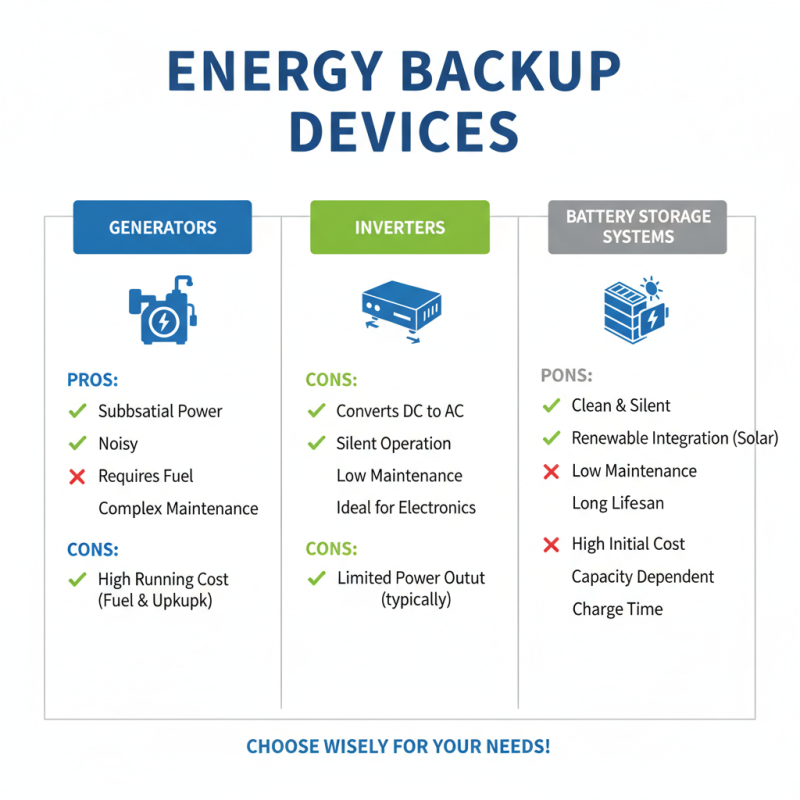
When choosing energy backup devices, several options stand out. There are generators, inverters, and battery storage systems. Each serves a unique purpose. Generators can provide substantial power, especially during outages. However, they can be noisy and require fuel. Maintenance can also be challenging. One must consider the long-term costs associated with fuel and upkeep.
Battery storage systems offer a cleaner alternative. They store energy from the grid or solar panels. This energy can be used when needed. While silent and efficient, their initial cost can be high. Also, their lifespan varies, leading users to think critically about when to replace them. Inverters, on the other hand, are vital for converting power. They can be found in many setups but may not provide standalone solutions.
Ultimately, each energy backup device has strengths and weaknesses. Users often face dilemmas in practicality versus cost. It’s essential to evaluate specific needs and use cases. Not every backup solution fits all situations, making thoughtful consideration crucial.
Top 3 Battery Backup Systems: Performance Metrics and User Ratings
When selecting a battery backup system, performance metrics are crucial. Many users report consistency in power supply during outages. A study by the Energy Information Administration showed that residential power outages have increased by 60% over the last decade. Battery systems can help mitigate these issues effectively.
User ratings often highlight capacity and charge times. Systems with higher capacity tend to receive better reviews. A recent industry report noted that units with at least 2000 watt-hours provide ample energy for essential devices. However, some users find recharge times lengthy, impacting overall satisfaction. It's essential to balance capacity with practical use cases.
Not all systems work seamlessly. Real-world usage sometimes reveals issues like weight and portability. Some consumers struggle to move heavier units during emergencies. Furthermore, the noise level of certain devices can be a concern for home and office environments. These factors warrant careful consideration, ensuring the selected backup system aligns with specific needs and preferences.
Exploring Generator Options: Benefits and Limitations for Home Use
When considering energy backup devices, generators are a popular choice. They can provide reliable power during outages. However, they come with both benefits and limitations. Understanding these aspects is crucial for effective home use.
Generators can deliver electricity in emergencies. They are available in various sizes and capacities. This versatility allows for different needs. Generators can power essential appliances, from refrigerators to heating systems. However, they can be noisy and may require regular maintenance. Fuel availability is another concern. Using gasoline can be convenient, but it also poses storage challenges.
Moreover, their operation can involve a steep learning curve. Some users struggle with installation or understanding output capacity. It's essential to calculate your energy needs carefully. Misjudging requirements could lead to inefficient usage. While generators can be lifesavers, they are not a one-size-fits-all solution. Weighing the pros and cons before investing is critical.
Conclusion
In today's world, reliable electricity is crucial for both homes and offices, making the selection of an effective Energy Backup Device essential. The article outlines the increasing prevalence of power outages, supported by statistics that highlight the importance of having backup solutions. It explores various types of energy backup devices available on the market, analyzing their functionalities and user satisfaction.
Specifically, the article delves into the top three battery backup systems, assessing their performance metrics and user ratings, which help consumers make informed choices. Additionally, it discusses generator options, outlining their benefits and limitations for residential use, and highlights inverter technology, which significantly enhances the efficiency and longevity of energy backup solutions. Overall, understanding these options enables users to better prepare for unexpected power interruptions.

 Mobile Generator